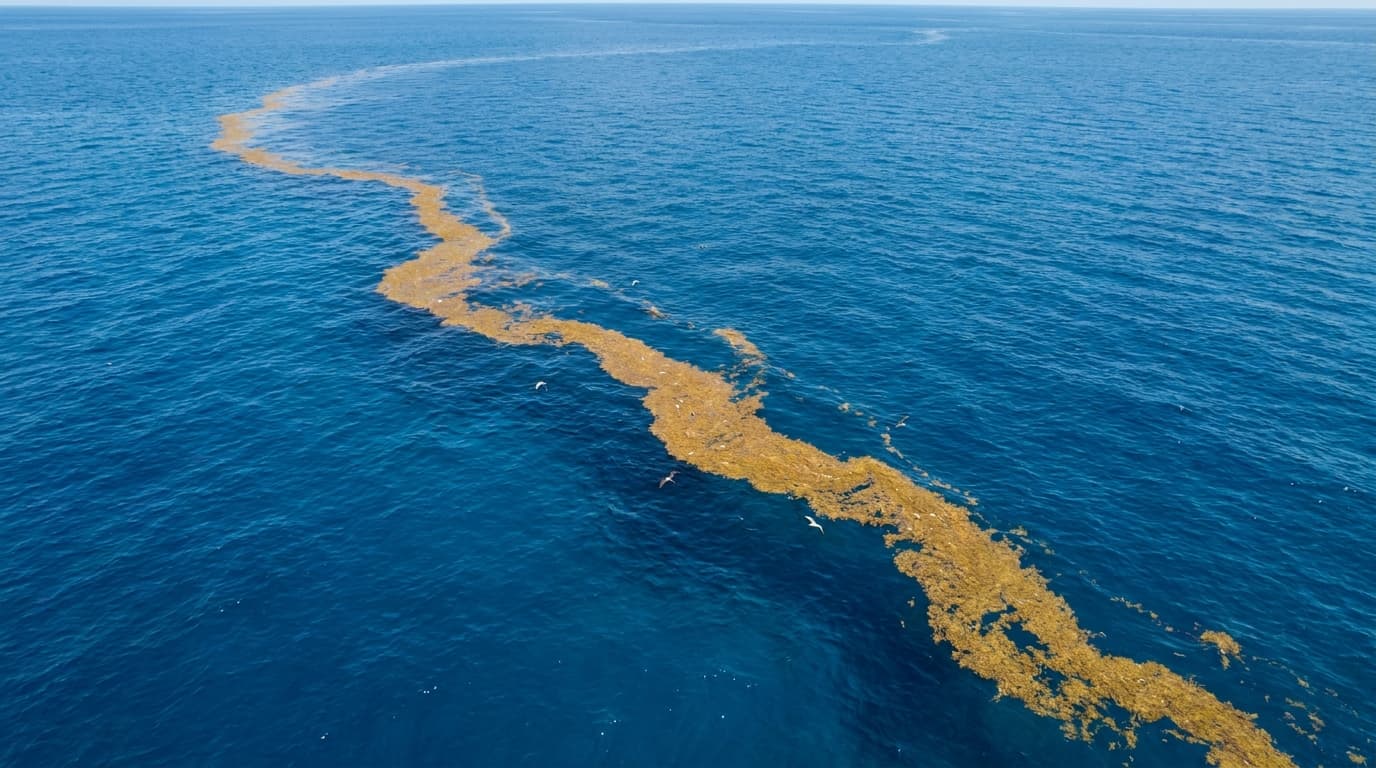
A mahi trip doesn't start with a plan. It starts with a smudge on the horizon — a mat of yellow-brown sargassum weed hanging along a rip line, a couple of frigate birds working slow circles a few feet above it. That's the whole game in the Florida Keys. Find the mat, and there's a decent chance a school of dolphinfish is holding underneath it, using the shade and the baitfish it collects like a floating pantry.
Mahi-mahi — dolphin, dorado, whatever the dock calls them that week — are the reason half the offshore boats leave Key Largo, Islamorada, Marathon, and Key West between April and September. They're fast, they jump, they run in schools instead of alone, and they eat better than almost anything else that swims inshore. Here's what the season actually looks like, what a trip costs in 2026, and what you're allowed to bring home.
The season runs longer than most people plan for
Mahi show up off the Keys as early as April, but the run builds instead of switching on. May and June are the strongest months out of Islamorada and Key Largo — big schools, steady numbers, and weather calm enough to hold a good drift on a weed line. July still fishes well, though the fish push farther offshore as the water warms.
Key West runs on a different clock. Scattered fish show up in April same as everywhere else, but the real consistency doesn't arrive until July and August, and September can still hold fish before the run tapers off. If you book a late-August trip and an Islamorada captain sounds less excited than he did in June, that's normal. Try Key West instead.
None of this is a hard border. Weather, water temperature, and a good Gulf Stream eddy matter more than the calendar square. A captain who fished yesterday will always beat a seasonal average.
How captains actually find them
Open blue water looks the same for miles. Mahi don't spread evenly across it — they stack up wherever the ocean gives them an edge: a weed line, a current rip, a piece of floating debris, a temperature break you can just make out as a faint color change on the surface. Birds give it away before your eyes do. Frigates and terns working a tight circle usually mean bait is getting pushed up from below, and mahi are underneath doing the pushing.
Once a captain marks fish, the tactics shift. Trolling skirted or naked ballyhoo covers ground between weed lines. Live pilchards suspended under a kite — a technique borrowed from the sailfish crowd — keep bait splashing on the surface where a mahi can't ignore it, when the wind cooperates. Chumming next to a productive mat can turn one fish into a dozen, since mahi schools tend to stick around as long as their friends are still biting.
That wind-dependent kite step is part of why a full-day trip beats a half-day one more often than people expect. Six extra hours is enough time to run past a dead stretch of ocean and find the one weed line actually holding fish.
What a mahi charter costs in 2026
Prices are quoted per boat, not per person — you're chartering the vessel and crew for the day, then splitting the cost across your group. A boat licensed for six passengers (the "six-pack" designation, from the U.S. Coast Guard cap on that class of charter) is the standard setup, so a full boat of six often lands cheaper per head than a smaller group booking the same trip.
| Trip length | Typical Florida Keys price (2026) | What moves the number |
|---|---|---|
| Half-day (around 4 hours) | roughly $1,000–$1,600 per boat | Boat size, marina, how far the weed lines are running that week |
| Full-day (around 8 hours) | commonly $1,800–$4,000+ per boat | Fuel for the longer run, kite gear, distance to blue water |
Nobody can give you one clean "average" for a Keys mahi trip, and you should be suspicious of anyone who tries — a 28-foot center console running six miles out and a 40-foot sportfisher running twenty are different trips with different fuel bills, even chasing the same fish. Run your own numbers on the specific boat quoting you, not on somebody's statewide figure.
What that works out to per person
Here's the math on the standard setup. Take a group of six filling a six-pack boat on a full-day trip quoted at $2,400:
- Boat: $2,400, which is $400 a head
- Tip for the crew, the customary 20% of the charter: $480, another $80 a head
- A fuel surcharge on a long run to blue water, if the boat charges one — say $150 — adds $25 a head
Call it $505 per person, roughly $3,030 for the boat, for eight hours offshore with tackle, license, ice, and fish cleaning included. The same boat split two ways is over $1,500 each — which is why filling the six-pack is the single biggest lever on what this trip costs you. Find four friends before you find a captain.
One dock-level opinion worth having: when a full-day offshore quote comes in far under the pack — $1,200 against a marina full of $2,200 boats — that gap is telling you something. Usually it's a shorter run that never reaches the water the fleet is fishing, an older boat, or a fuel surcharge waiting for you at the dock. Cheap half-days inshore are often genuine value. Cheap full-days offshore are where the surprises live. Ask what's included before you book — tackle, license, ice, and fish cleaning are usually part of the price, and a fuel surcharge on a long run sometimes isn't.
What the day actually looks like
Most trips leave the dock at first light or a little after. Mahi don't demand the pre-dawn departure that sailfish or swordfish trips do. Expect twenty to forty minutes running out to the first color change, longer if you're headed to blue water on a full-day trip. Once the mate finds a weed line worth working, the boat slows, teasers go out, and everyone waits.
The wait rarely lasts. Mahi hit hard, run fast, and jump — the cockpit gets loud in a hurry once you're on a school stacked under a good mat. Somebody's usually still setting a hook while somebody else is already fighting a second fish. It's a group sport in a way bottom fishing for snapper or grouper just isn't.
Early in the season, expect smaller "schoolie" mahi — a few pounds each, but often in numbers. By June and July, bigger "bull" (male) and "cow" (female) fish start mixing in, some pushing 20 to 30 pounds. A bull's blunt, squared-off forehead is unmistakable next to a cow's smoother profile — ask your mate to point it out on the first one you boat.
What you're allowed to keep
Florida's wildlife commission sets the recreational dolphinfish limit at 5 fish per person per day, or 30 per vessel — whichever is lower. That's down from 10 per person before a 2022 rule change tightened it. In Atlantic waters, which is where most Keys charters run, mahi need to measure at least 20 inches. The Gulf side carries no minimum size at all.
Rules shift, sometimes mid-season. Your captain will know the current limit cold, but it's worth a quick check of FWC's dolphinfish page yourself before you plan on filling a cooler.
Booking it right
A few questions separate a good mahi trip from a frustrating one:
- Half-day or full-day — and given today's wind forecast, which one does the captain actually recommend?
- Is the price per boat or per person, and what's the max party size this boat carries?
- Trolling, kite fishing, or both, depending on conditions?
- Is there a fuel surcharge on the long run, and is it in the quote or on top of it?
- Is fish cleaning included, and can you take fillets to a nearby restaurant to have them cooked that night?
That last one is a real Keys tradition worth asking about. Plenty of restaurants in Islamorada and Key West will cook your catch for a plating fee, which turns an afternoon of fishing into dinner with a story attached.
If you're still deciding between a shorter trip and a full day offshore, the half-day vs. full-day breakdown covers that tradeoff in more detail than one section here can manage. And once you're back on the dock with a cooler of dolphin, the mate worked for tips same as any other crew — here's what's actually customary to bring in cash.