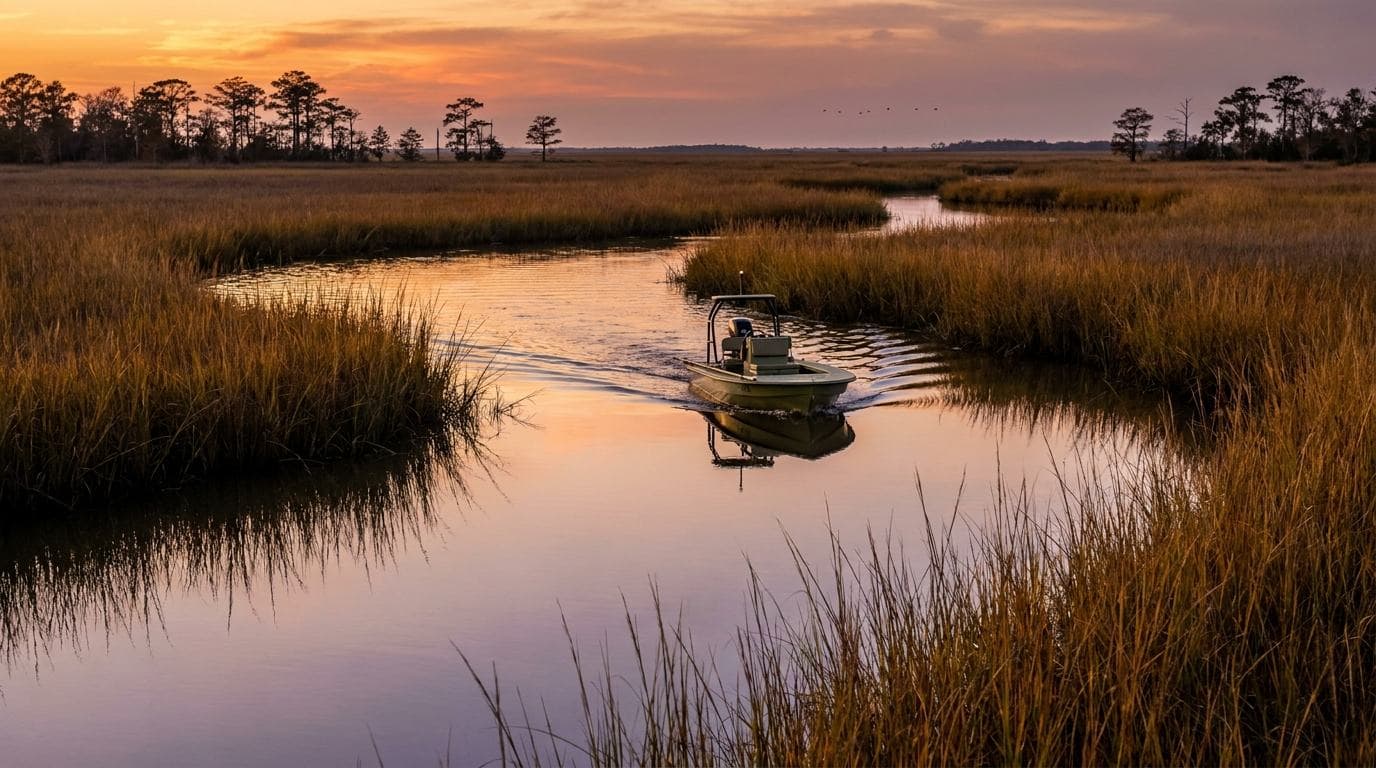
Louisiana Doesn't Close the Redfish Season — But It Does Have a Best Month
Redfish are the one species in Louisiana you can chase 365 days a year. There's no closed season on red drum in state waters. That doesn't mean every month fishes the same, and if you're planning a trip around one specific outcome — a trophy bull red versus a stacked box of eating-size fish — the calendar matters more than which guide you pick.
Season at a Glance
| Months | Pattern | Best for |
|---|---|---|
| March–May | Fish spread across the marsh as water warms; steady, reliable action | Consistent numbers, good for first-timers |
| June–August | Early-morning and late-evening bite as summer heat sets in | Shallow sight-casting, fly anglers |
| September–November | The bull redfish run — mature fish over 30 pounds move inshore to spawn | Trophy fish, the marquee Louisiana trip |
| December–February | Fish hold in deeper holes and cuts as water cools | Fewer crowds, still catchable with the right guide |
If someone tells you there's a single best month, ask them best for what. October's bull reds and April's marsh bite are two different trips wearing the same species name.
What You're Actually Allowed to Keep
Louisiana tightened its redfish regulations in 2024, and the rules are stricter than a lot of anglers expect walking in:
- Daily creel limit: 4 redfish per person.
- Slot limit: 18 to 27 inches total length. Anything outside that slot goes back — no exceptions.
- On a chartered trip, the captain and crew have a zero creel limit. They can't keep fish under their own license while working, even inside the legal slot.
That last one catches people off guard. It's not a guide being stingy. It's the law. A good captain explains this before you leave the dock, not after someone's already measuring a fish they assumed was going home in the cooler.
What a Louisiana Redfish Charter Actually Costs in 2026
Prices vary by region — Venice runs differently than Delacroix, and Vermilion Bay differently than either — but the broad ranges hold up across the coast.
| Trip length | Typical range | What moves the price |
|---|---|---|
| Half-day (4–5 hrs) | $600–$850 | Boat size, marsh vs. open-water run, party size |
| Full-day (6–8 hrs) | $850–$1,200+ | Fuel burn on longer runs, multi-species trips, premium operations |
Most of those rates cover two to three anglers, plus the boat, fuel, a licensed guide, tackle, bait, and ice. Budget separately for a non-resident charter fishing license — a three-day version runs about $20 — and a tip in the 15 to 20 percent range for a guide who worked hard to put you on fish. That's not padding the bill. It's most of a working captain's real income, since the boat payment and insurance eat a large chunk of the trip price itself.
What the Day Looks Like
Most Louisiana redfish trips launch from a marina well before sunrise and run out through miles of marsh, not open Gulf water — so seasickness is rarely the issue it is offshore. Expect live or cut bait on some trips, gold spoons and soft plastics on others, depending on water clarity and what the guide's been seeing that week. Speckled trout, flounder, and black drum show up as honest bycatch on most trips. Nobody complains about a mixed box.
A good guide reads the wind and tide the night before and picks the spot accordingly. That's most of what you're paying for. The fish don't move randomly, but where they're holding shifts with the tide stage, and a captain who runs that water daily knows it cold.
Where to Base the Trip
Louisiana's coast isn't one fishery. It's four or five different ones stitched together, and picking the right launch point matters as much as picking the right month.
- Venice. The Mississippi River delta — sprawling, remote, and famous for numbers. A longer run to reach some of it, but the marsh here holds fish in volume most of the year.
- Delacroix and Hopedale. Closer to New Orleans, classic skinny-water marsh. A strong pick if you want to be back in the city for dinner.
- Vermilion Bay and Delcambre. Southwest Louisiana, less crowded than the areas near New Orleans, with a strong reputation for the fall bull red run.
- Grand Isle. Louisiana's only inhabited barrier island — redfish plus a real shot at speckled trout and other species in the same trip.
None of these is objectively "the best." A guide who's fished the same twenty square miles of Delacroix marsh for a decade will out-produce a generalist working unfamiliar water, no matter how good that water looks on a map.
Choosing the Right Trip
Redfish-specific operators tend to run shallow-draft bay boats built for skinny marsh water, which matters if the trip also touches speckled trout or flounder in the same outing. If you're set on a fall trophy hunt, say so when you book. Not every captain fishes the same water in September that they fish in April, and a guide who specializes in the bull red run will work it differently than one splitting time across three species all season.
Before you book anyone, run through the questions worth asking a fishing guide before you hand over a deposit — license, insurance, cancellation policy, what happens if the weather turns. And if you're new to charter tipping etiquette, the real ranges guides actually see are worth reading before the trip, not during the drive to the dock.
Packing for the Marsh, Not the Boat
A Louisiana marsh trip packs differently than an offshore run. You won't need seasickness medication for most of these trips — the water's usually flat and protected. You will need real sun protection: a buff or long-sleeve fishing shirt, polarized sunglasses, and reef-safe sunscreen, since there's often no shade for hours at a stretch. Summer trips call for the lightest breathable layers you own. Winter trips, especially the December-through-February window, call for the opposite — Louisiana marsh cold is a damp cold, and a warm morning by 10 a.m. can still start at 40 degrees on the water at dawn.
Bring a soft cooler if you plan to keep fish, and ask your guide ahead of time whether they'll clean your catch or point you to a dock that will. Most will. Few mention it unless you ask.
Before You Book
Louisiana's redfish fishery is forgiving of a bad plan. The fish are there most months, in most conditions. What isn't forgiving is booking blind: the wrong region for the trip you actually want, a captain who doesn't specialize in the season you're chasing, or a surprise about what you're legally allowed to bring home. Get those three things right and the rest of the day mostly takes care of itself.
For more on choosing a trip and getting the most out of it, browse the rest of the guides library. Most of what applies to a first inshore charter anywhere on the Gulf Coast applies here too.