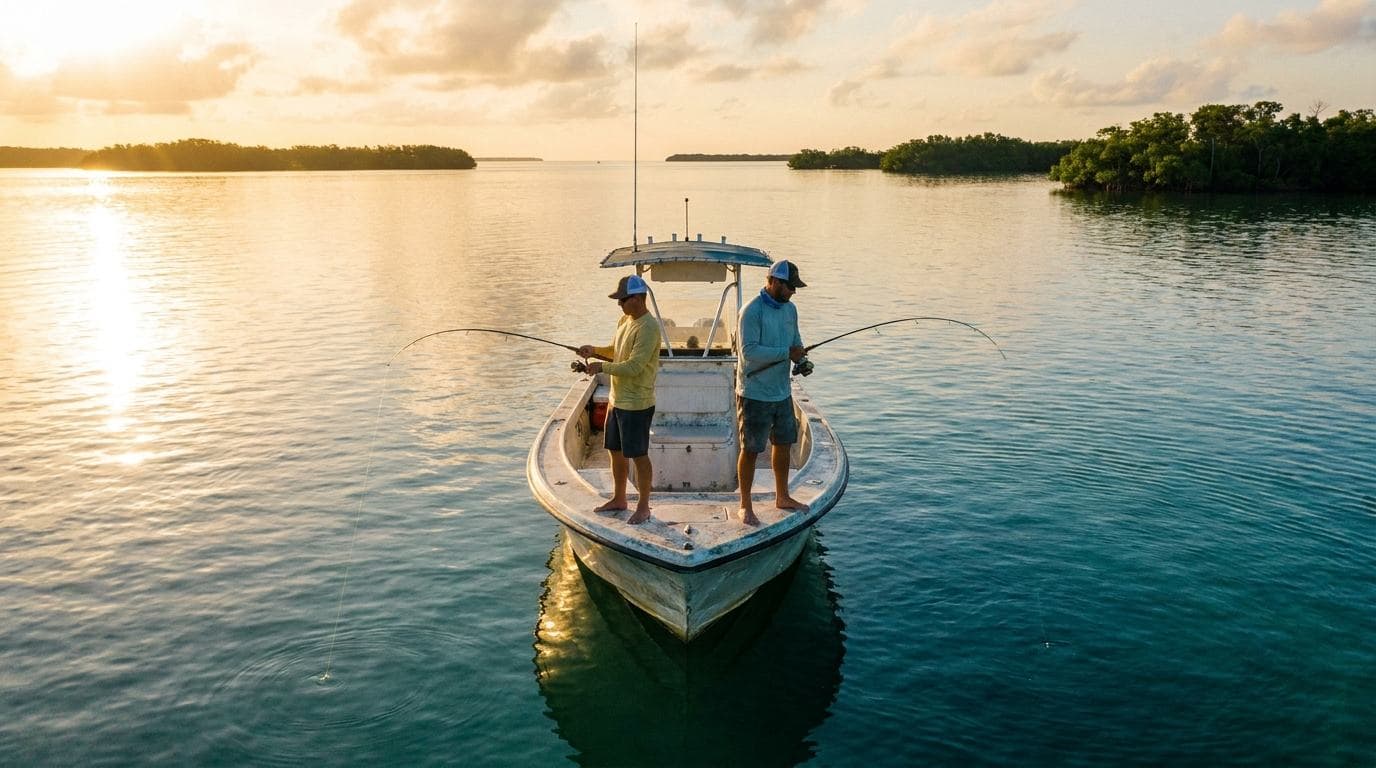
Why the Right Guide Makes or Breaks the Trip
Every guided fishing trip starts with a decision most anglers make in under five minutes — scrolling a marketplace, clicking the best photo, checking the price. That approach works out sometimes. It also produces days where you spend eight hours on the water with someone who puts you on the wrong species for the season, offers little instruction, and hands you back a slightly sunburned version of yourself with nothing in the cooler.
The guide is the product. The water, the boat, the tackle — those matter, but they are variables the guide controls. Spending twenty minutes asking the right questions before you book is the single highest-leverage thing you can do for the quality of your trip. Here are twelve questions that separate a great booking from an expensive mistake.
1. Are you licensed and insured for paying passengers?
For saltwater and navigable freshwater fishing with paying clients, federal law requires a USCG Operator of Uninspected Passenger Vessels (OUPV) license — commonly called a six-pack license for vessels carrying up to six passengers. Inland-only guides may instead hold a state guide license, depending on where they operate. Either way, the guide should know exactly what credential they hold and be able to tell you without hesitation.
Insurance matters just as much. A standard personal boat policy does not cover you if something goes wrong during a paid charter. Ask specifically whether the guide carries passenger-for-hire liability insurance. A well-run operation carries at least $300,000 in general liability coverage. If you get a vague answer, or the guide seems uncertain about what you are asking, take that as a firm reason to keep looking. These are general orientation points — verify the specific requirements for your state and waterway.
2. Is this a private charter or a shared trip?
A private charter means the boat is reserved exclusively for your group. A shared trip — sometimes called a walk-on — means you will fish alongside strangers who may have different goals and experience levels. Both are valid options depending on your budget and preference, but you need to know which one you are booking. Some marketplace listings obscure this distinction, so ask directly.
3. What species are realistically biting right now?
A guide should be able to tell you what they have caught in the last two weeks, not just what species the season theoretically allows. Ask what is feeding, where fish are holding, and what techniques are working. A guide who gives you a specific, current answer has been on the water recently. A guide who gives you the same generic answer that appears on their website regardless of month probably has not.
4. How many people will be on the boat?
Ask the maximum headcount for the trip and confirm it matches the vessel capacity for the kind of fishing you are doing. A six-pack license permits up to six paying passengers, but six people on a 24-foot center console targeting redfish in the backcountry is a very different experience from four people on a 28-foot bay boat with a trolling motor. Ask what the typical group size is for the style of trip you are planning.
5. What is included in the price?
Do not assume anything is included. Rods and reels are usually provided. Bait — especially live bait — is sometimes extra or not included at all. Your fishing license is almost never covered unless the guide explicitly says so; in most states you are responsible for your own license before you step on board. Ask specifically about:
- Rods, reels, and terminal tackle
- Bait, and whether live bait carries a surcharge
- Ice, coolers, and fish cleaning
- Water and basic refreshments
- Bags or packaging for taking the catch home
Fish cleaning catches first-time charter clients off guard most often. Some guides include it; others charge $1–$2 per fish or a flat cleanup fee in the $25–$50 range. Know the number before you hand over a deposit.
6. Do you work well with beginners?
If this is your first guided trip — or you are bringing someone newer to fishing — ask directly. Some guides are excellent teachers who enjoy walking beginners through technique. Others prefer working with experienced anglers and are not good at hiding impatience when a first-timer misses a hookset. Ask: "We are fairly new to this — how hands-on do you get with instruction?" The answer will tell you whether the day will be memorable or frustrating.
7. What should we wear and bring?
Sun exposure on open water is more intense than most people expect, even on overcast days. A moving boat strips away shade and intensifies UV. Come prepared with:
- Long-sleeved UPF sun shirts — more reliable than sunscreen alone in wind
- Polarized sunglasses, which also help you spot fish in the water column
- Non-marking, non-slip soled shoes; dark-soled shoes leave marks on fiberglass decks
- Layers if you are going offshore or fishing early morning in fall or spring
- Any personal medication, including seasickness medication taken the night before if you are prone to motion sickness
8. What is your cancellation and weather policy?
Understand the terms before any money changes hands. Ask what qualifies as a weather cancellation, who makes the call, and what happens to your deposit if either side needs to cancel. A professional guide has a written policy. Anything requiring you to "trust them" on a cancellation is not a policy — it is an unresolved question that tends to get expensive.
Most reputable operations reschedule a weather cancellation at no penalty to the angler. Angler-initiated cancellations within 48–72 hours of the trip typically forfeit the deposit. Both are standard and reasonable. What is not reasonable: no policy at all, or a policy you have to ask about after your deposit is already paid.
9. Do you have recent reviews I can read?
Google reviews are the most reliable signal. Facebook reviews are a strong second. Marketplace reviews are useful but keep in mind that commission level is one of the factors those platforms document in their own ranking systems — so the sort order reflects more than review quality alone. Look for reviews mentioning specific species, specific techniques used, and how the guide communicated throughout the day. Those details indicate real experiences, not templated five-star submissions.
One or two negative reviews in a long history are not disqualifying. How the guide responded to them is often more revealing than the complaint itself.
10. How do I reach you before the trip?
A guide who provides a cell number and responds to texts within a few hours is the baseline standard for a well-run operation. If pre-trip communication already feels like chasing someone down, that is typically a preview of how the day itself will go. Good guides confirm the meeting point, share a conditions update the day before, and are available for last-minute questions — not because they have to be, but because they understand that client confidence is part of what they are selling.
11. Should I book direct or through a marketplace?
Booking directly through the guide's own site — or by calling or texting them — is almost always the better choice for both parties. Fishing marketplaces charge guides typically 10–30% in commissions on every booking, which either compresses the guide's margin or gets built into the price you pay. Guides who prioritize direct bookings often have better date availability, respond faster, and are not running at the volume required to absorb platform fees.
Use marketplace listings to discover guides. Book direct when you can. Most guides will be straightforwardly grateful if you ask about a direct option. The guide who manages their own calendar and answers their own phone is usually the one you want on the water with you anyway.
12. What would you tell a first-timer to expect from the day?
This is the best question on the list because it is open-ended. A confident, experienced guide answers it honestly: fish do not cooperate on command, tides and wind can reshape the plan mid-morning, and some days are slower than others regardless of preparation. A guide who oversells — "we catch fish on every trip, guaranteed" — is setting up a transactional disappointment the moment conditions are not ideal. A guide who tells you what a great day looks like, and what a tough day still delivers, is someone who respects the sport and respects your time.
Once you find a guide who answers these questions well, book direct and keep the number. The best guided fishing trips rarely stay one-offs — they tend to become annual events, built on a relationship with someone who knows the water, reads the tides, and knows how to put you on fish when conditions cooperate.
Not sure where to start? Browse the rest of the guides library for more on deposits, tipping, and what to expect on your first trip — the homework that makes whichever guide you choose a better bet.