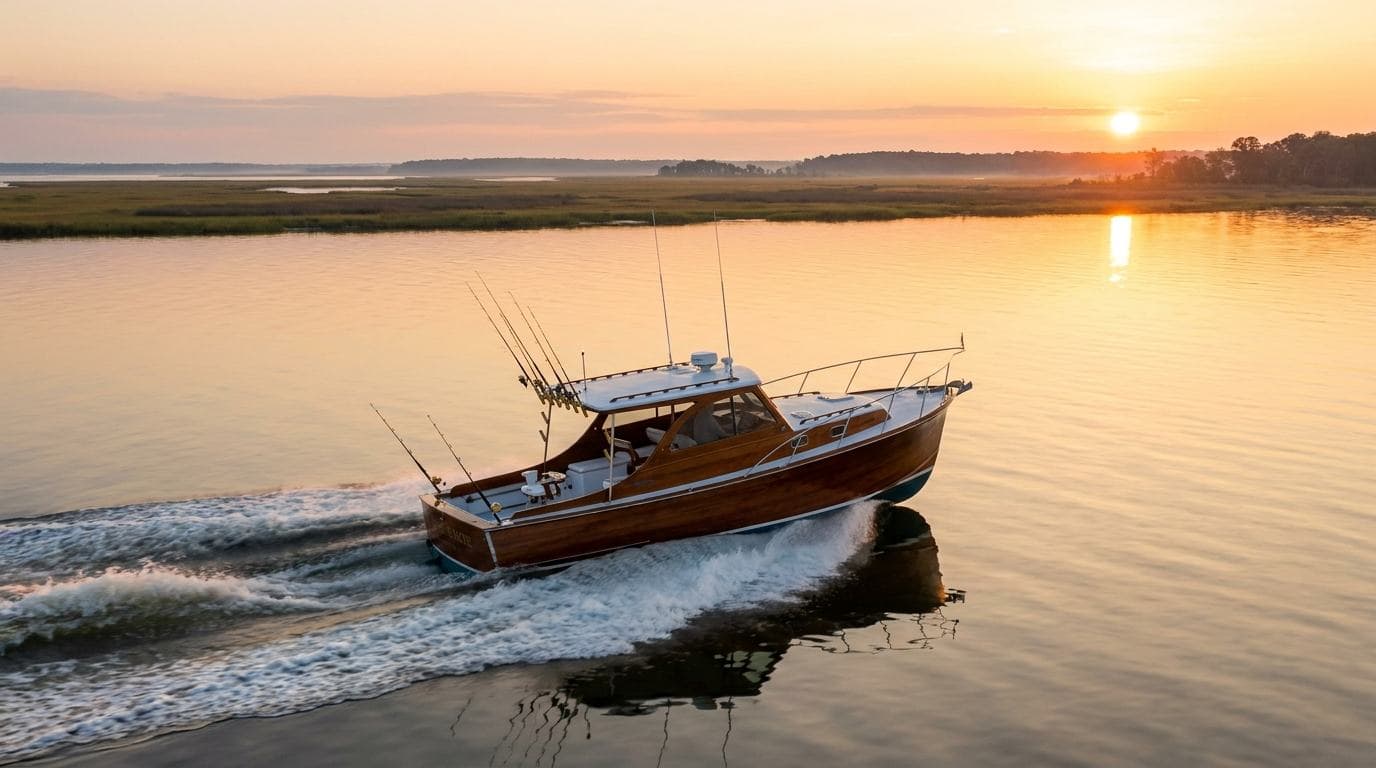
Ask a Chesapeake Bay captain what "the season" means and you'll get a different answer depending on the month. Striped bass — rockfish to anyone who's actually fished the Bay — aren't a single open window. They're four separate seasons stacked in one calendar, and booking the wrong one is the most common way first-timers end up disappointed with a trip they paid good money for.
Here's what the 2026 regulations actually say, what a charter costs at each point in the year, and what to expect once you're on the water.
The 2026 striped bass calendar, in plain terms
Maryland splits the Chesapeake striped bass season into catch-and-release stretches and harvest windows, and the dates move the whole experience:
| Dates | Season type | What it means for you |
|---|---|---|
| Jan 1 – Apr 30 | Catch and release only | No fish home, but big migratory fish are around — a photo-and-release trip |
| May 1 – Jul 31 | Harvest open | 1 fish/day, 19"–24" slot — the classic summer charter window |
| Aug 1 – Aug 31 | Closed entirely | No targeting striped bass at all this month |
| Sep 1 – Dec 5 | Harvest open | 1 fish/day, 19"–24" slot — fall run, often the best bite of the year |
| Dec 6 – Dec 31 | Catch and release only | Fish are still thick; nothing goes in the cooler |
A few spawning rivers — the Choptank, Chester, Manokin, Nanticoke, Patuxent, Transquaking, and Wicomico, plus the Upper Bay around the Susquehanna Flats — stay closed to striped bass targeting from March 1 through May 31 regardless of the main-stem season. If your captain mentions running somewhere else during those months, that's why.
Regulations shift year to year, so confirm current dates with your captain or the Maryland DNR before you book — don't rely on last year's numbers, and don't rely on this article past this season either.
What a charter actually costs
Charter pricing on the Bay is quoted per boat, not per person, which trips people up when they're comparing it to a per-head number they saw on a marketplace listing. A typical structure:
- Half-day (4–5 hours): roughly $600–$2,000 for the boat, most commonly $700–$1,000 for a standard 6-passenger center console.
- Full-day (6–8 hours): roughly $1,200–$2,500 for most boats, climbing toward $4,000+ on larger or specialty vessels.
- What's included: rods, reels, bait, tackle, and your Maryland fishing license are standard on nearly every Bay charter — you don't need to buy a license separately.
- Gratuity: 20–25% of the trip total is the going rate, paid to the mate at the end of the day. Bring cash.
Split six ways, a $900 half-day charter comes out to $150 a head before tip — often cheaper than a day of golf, and you get to keep dinner.
Price swings mostly on boat size and trip length, not on the fish. A 45-foot boat with a mate and A/C cabin costs more than a 22-foot skiff whether the bite is good or not.
Which window should you actually book?
If you want a fish for the table, book May–July or September–early December — those are the only harvest windows, and the fall run in particular tends to bring bigger schools and more consistent action as water temperatures drop.
If you'd rather chase size than dinner, the winter catch-and-release stretch (January through April) is when the biggest migratory stripers move through the Bay on their way to spawn. You won't take one home. You might hook the biggest fish of your life.
Either way, skip August. The Bay's striped bass are closed to targeting that entire month, and any captain still offering a "rockfish trip" in August is either targeting something else or not being straight with you.
What the day actually looks like
Most Bay striper trips leave early — well before sunrise in summer to beat the heat and the boat traffic, later in the cooler months. You'll run to structure the captain's been watching all week: a channel edge, a bridge piling, a school marked on the graph. Trolling with umbrella rigs or bucktails is common in open water; live-lining spot or menhaden near structure is the go-to when bait's around.
Expect some running between spots if the first stop is quiet. Rockfish move with the tide and the bait, and a good captain will burn fuel chasing them rather than sit on a dead spot out of stubbornness. That's part of what you're paying for.
Layer up more than you think you need to, even in summer — the water's colder than the air most mornings, and wind off open Bay cuts through a t-shirt fast. Sunscreen either way; there's no shade out there past 9 a.m.
How far ahead to book
Good weather windows and the fall run get claimed early. Popular captains during September and October — the stretch most locals rate as the best fishing of the year — often book out four to eight weeks in advance, especially for weekend dates. Weekdays stay easier to grab on short notice almost year-round.
If your schedule is flexible, ask your captain which weekday tides or windows still have room; you'll usually get a better rate and a quieter stretch of water than a Saturday slot booked two months out. If a specific weekend is the only one that works for your group, call as early as you can — six to eight weeks out isn't too soon for peak season.
Booking it right
Ask directly which season window your trip falls in and whether you're targeting a harvest or catch-and-release stretch — a captain who answers precisely, with dates, is one who's paying attention to the regulations that change every year. Confirm the boat's passenger limit against your group size before you book six people onto a boat rated for four.
Want the fuller version of that vetting conversation before you hand over a deposit? Twelve questions worth asking any fishing guide covers the rest of it — licensing, cancellation policy, what a fair deposit looks like. And if a striped bass trip goes well, the guides library has season-by-season breakdowns for a dozen other fisheries worth planning your next one around.