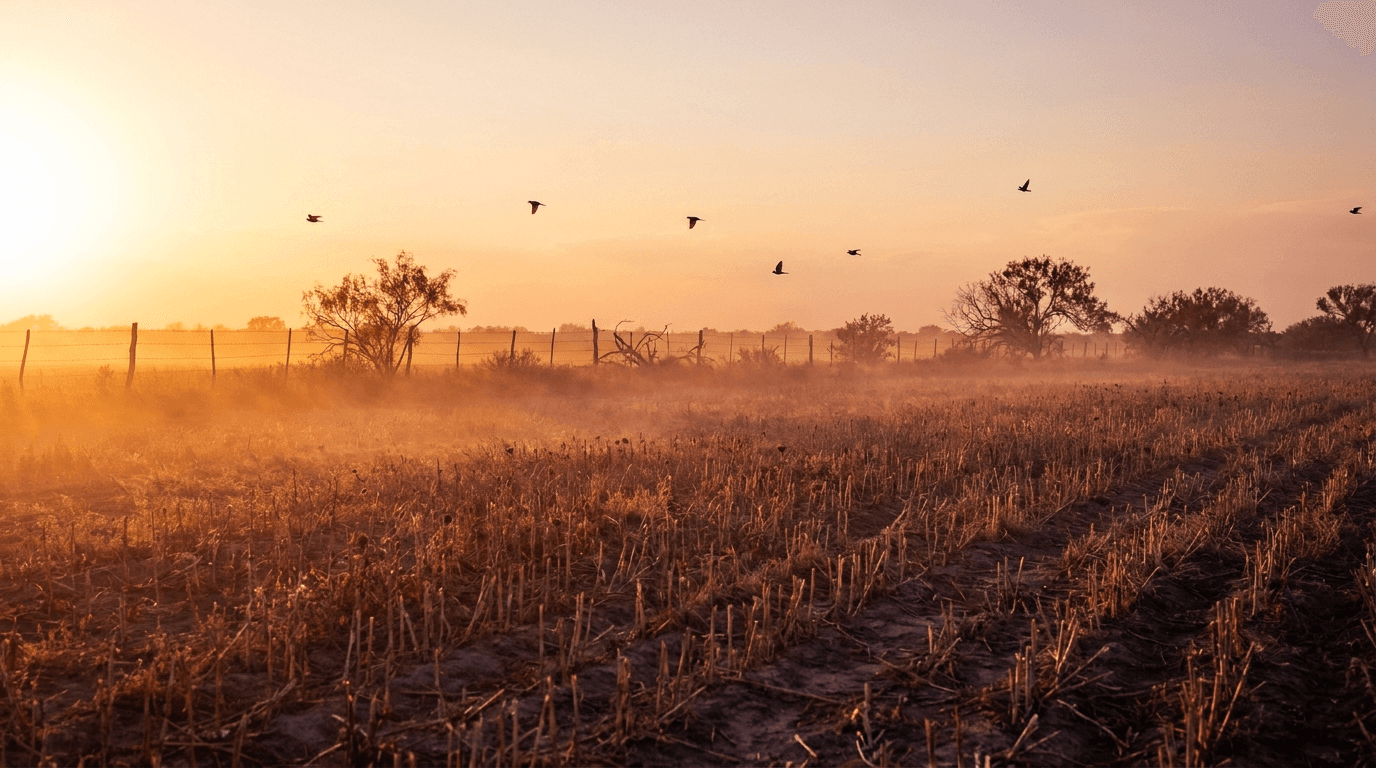
Dove season is the one that gets circled on the calendar in June. It opens fast, opens loud, and for a lot of Texas hunters it's the true start of fall — weeks before the first duck blind gets dusted off or the first tree stand goes up. If you've never sat a field on opening morning, here's what it actually costs, what the law requires, and what the first hour will feel like.
When Texas dove season opens in 2026
Texas Parks and Wildlife splits the state into three zones, and for years the South Zone opened later than the rest. That changes this year. Statewide, opening day is September 1, 2026 — the first time all three zones have opened together.
- North Zone: Sept. 1 – Nov. 8, then Dec. 18 – Jan. 7
- Central Zone: Sept. 1 – Oct. 25, then Dec. 11 – Jan. 14
- South Zone: Sept. 1 – Oct. 25, then Nov. 25 – Dec. 29
The split seasons matter more than the dates suggest. Early September is mourning doves moving through on their first push south — fast, thin flocks, hot fields. The December stretch is a different hunt entirely: colder mornings, fewer birds, but the ones that show up tend to hold still longer over a good water hole. Ask an outfitter which window they're booking you into before you commit; "dove season" isn't one hunt, it's two.
What a guided dove hunt actually costs
Dove hunting has the widest price spread of almost anything you can book guided, because "a dove hunt" covers everything from an afternoon in a sunflower field to a three-day lodge package with a chef. Based on outfitter pricing published in July 2026:
| Format | Typical price per person | What's usually included |
|---|---|---|
| Single-day field hunt | $100 – $175 | Field access, guide, dove seat/stool, sometimes a bird count included |
| Weekend hunt, no lodging | $200 – $350 | Two half-day or full-day hunts, guide, cleaning station |
| Multi-day package with lodging | $900 – $1,100+ | 2–3 days of hunts, lodging, meals, guide, often a second-species option |
Shells are the variable nobody budgets for. A shooter who connects on one bird in five will burn through 75 shells or more in a good morning, and most outfitters don't include ammunition in the base price — ask upfront whether shells are BYO, à la carte, or bundled. On a $125 day hunt, a case of shells can add another third to your total spend.
A fair guided rate covers a field that's been scouted and worked that week — not just a lease with birds on it somewhere. Ask when the outfitter last hunted the field you're booking.
The license you actually need
Dove is a migratory game bird in Texas, which means the license stack is different from a deer tag. You need:
- A valid Texas hunting license (resident or non-resident)
- The Migratory Game Bird Endorsement — about $7, added when you buy your license
- HIP certification — free, a few survey questions at time of purchase
You don't need a federal duck stamp for dove — that's a waterfowl-only requirement, and it's the single most common thing first-timers get wrong when they read a generic "migratory bird" checklist. Anyone born on or after September 2, 1971 also needs proof of hunter education on them in the field. The daily bag limit runs 15 mourning doves; check the current Outdoor Annual for the season you're booking, since possession limits and any special white-winged dove days can shift zone to zone.
What actually happens once you're in the field
It's simpler than people expect, and that's part of the appeal. You'll walk in with a shotgun broken open or the action locked back — no shell chambered until you're set up — find your spot along a fence line or a sunflower row, and wait. Doves fly fast, low, and erratically, so most of your shots are going to be crossing shots at 20-30 yards, not the straight incomers you picture.
A few things a guide will expect you to already know:
- Repeating shotguns get plugged to a three-shell capacity for migratory bird hunting — it's the law, not house preference.
- Bring your own eye and ear protection. A busy field means a lot of shooting in a short window.
- A 12-gauge with 7½ or 8 shot is the standard load; nobody's going to raise an eyebrow if that's what you show up with.
- A bucket or a low stool earns its keep twice — something to sit on, something to carry shells and water in.
The etiquette is mostly common sense once someone says it out loud. Don't swing your barrel toward another hunter's position, even to track a bird. Call out your bird count if the guide's tracking limits across the group. And when you're done, the unload-and-verbally-confirm routine isn't optional — it's how a field full of strangers with shotguns stays a field full of strangers with shotguns and no incidents.
Questions worth asking before you book
- Which zone and which split (early September vs. the December stretch)?
- Is this a half-day, full-day, or multi-day hunt — and what's the cutoff time?
- Are shells included, or priced separately?
- Has the field been scouted and hunted recently, or is it a lease that hasn't been checked this week?
- What's the cancellation policy if the weather or the birds don't cooperate?
If you want the fuller version of this list — the questions that apply beyond dove season, to any guided hunt you're vetting — our guide to choosing a hunting outfitter walks through what to ask and what a fair contract looks like before you send a deposit.
Is opening weekend worth booking, or should you wait?
Opening weekend gets the crowds and the hype, and for good reason — the birds haven't been shot at yet, and fields that have held doves all summer are usually still holding them September 1. It's also the most expensive, most competitive weekend to book, and outfitters with a good reputation fill those dates by mid-summer.
The quieter answer: the second and third weekends of September are often the better value. Prices soften, fields are easier to book on short notice, and birds that survived opening weekend have usually settled back into a pattern rather than scattering. If your priority is a relaxed hunt over a trophy-weekend photo, that's the window to ask about.
Whichever weekend you pick, book it as a hunt, not a purchase. A guide who answers specific questions about the field, the split, and the shell policy is telling you more than any five-star review will. More reading on picking the right trip and the right outfitter lives in the guides library.