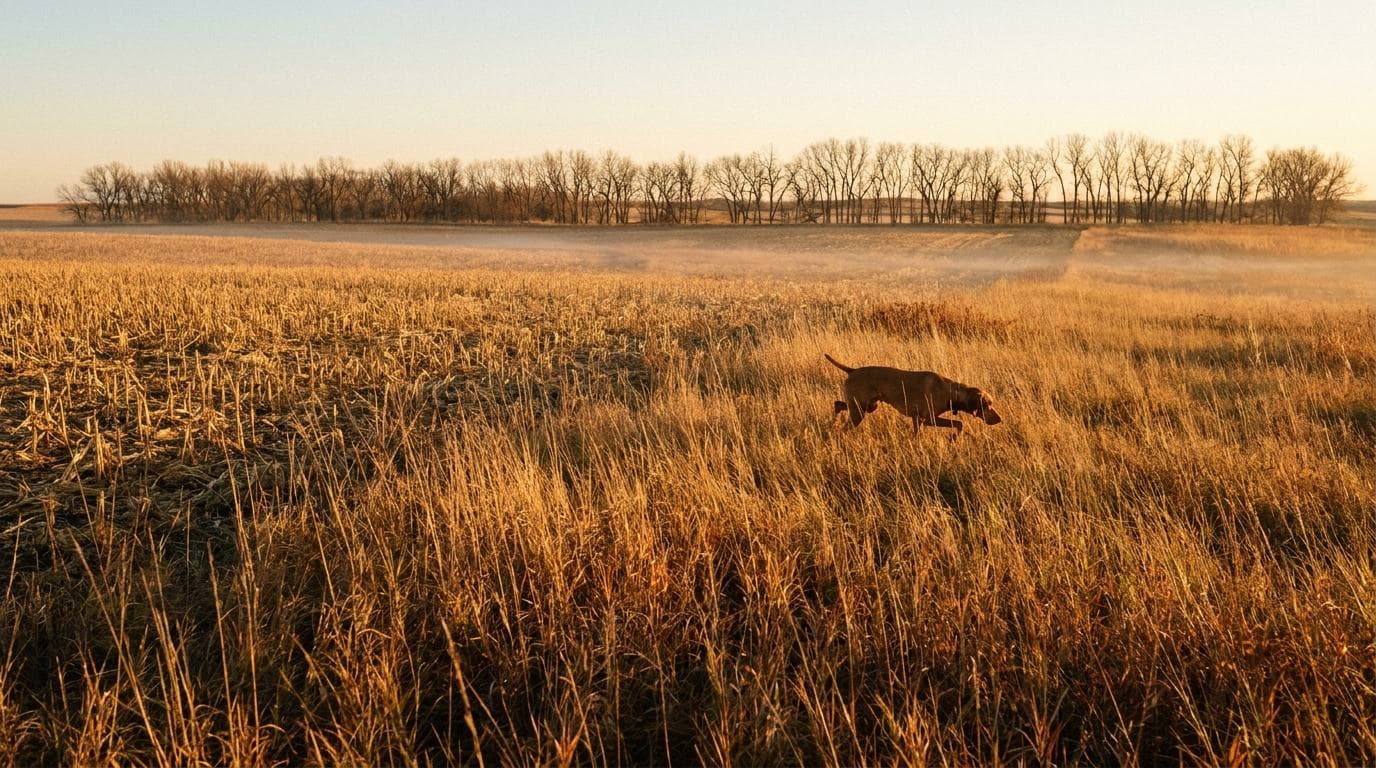
Somewhere around the third week of October, a few million roosters are going to explode out of milo stubble across South Dakota, and a few hundred thousand hunters are going to be standing in that stubble when it happens. That's not hyperbole. South Dakota is the pheasant capital of the country by a wide margin, and the state has built an entire hunting economy — lodges, walk-in land programs, small-town diners that only fill up in October — around making sure it stays that way.
If you've never hunted there, the logistics can feel more complicated than the hunting. Here's what the season actually costs, when it actually runs, and what you're paying for when you book a guided hunt instead of doing it yourself.
When the season runs
South Dakota's 2026 pheasant season follows the state's usual three-stage structure. Youth and mentored hunters get first crack at it: a nine-day window from September 26 through October 4. Then residents get an early week to themselves, October 11 through 17. The statewide opener — the one everyone means when they say "opening weekend" — falls on Saturday, October 18, 2026, and the season runs clear through January 31, 2027.
Shooting hours are 10 a.m. to sunset, every day of the season, no exceptions for opening weekend. The daily limit is 3 rooster pheasants, with a possession limit of 15. Hens are off-limits statewide.
Confirm exact dates with South Dakota Game, Fish and Parks before you book — they set the calendar fresh each year, and the structure above is the pattern, not a guarantee for every future season.
What it actually costs
Two separate expenses stack here, and first-timers routinely forget the second one.
The license. A nonresident annual small game license runs $142 and buys you two separate five-day hunting periods — useful if you're coming back for a second trip later in the season. A single-day nonresident license is $38. Nonresidents also need a $25 habitat stamp on top of whatever license they buy. Add it up and a nonresident hunter is looking at roughly $167 before a single shell gets loaded.
The hunt itself. This is where the range gets wide, because "guided pheasant hunt" covers everything from a bare-bones walk-along-with-a-guide-and-a-dog to a full lodge package with a private chef.
| Tier | Typical day rate | What's usually included |
|---|---|---|
| Budget guide-only | $200–$300/day | Guide, dogs, transport to the field, sometimes a field lunch — you handle your own lodging |
| Mid-range lodge | $350–$550/day | Lodging, guide with dogs, meals, bird cleaning |
| Premium lodge | $675–$1,000+/day | Full-service lodging, all meals, private guide, transportation, often multi-day packages |
South Dakota adds a 6% state sales tax on top of most of these packages, and lodges typically bill separately for birds shot over the daily limit if that's part of their model. Ask about both before you sign anything.
The DIY option nobody mentions enough
You don't need a lodge to hunt South Dakota pheasants legally or well. The state's Walk-In Area program opens over a million acres of private land to public hunting at no cost beyond your license — no reservation, no fee, just a GFP atlas and a truck. It's not the manicured, dog-heavy experience a lodge sells, and you'll do your own flushing. But it's a real, honest way to hunt the same birds for a fraction of the price if you're comfortable finding your own ground on public-access land.
What a guided day actually looks like
Most lodge days start early but not brutally early — pheasants don't move much before shooting hours open at 10 a.m., so breakfast and a gear check usually fill the morning. You'll meet your guide, get split into a line with your group and the dogs, and walk cover: shelterbelts, CRP grass, cattail sloughs, corn edges. Blockers often post at the far end of a field to catch birds that try to run out the back instead of flushing.
It's less "stand and shoot" than most first-timers expect and more a few miles of walking broken up by short bursts of chaos when a rooster gets up. Afternoons often move to a second field before lunch, then a shorter push before the 10 a.m.-to-sunset window closes for the day.
Picking a lodge without getting burned
Ask what's actually included before you commit a deposit — meals, lodging, and bird cleaning are the three line items that vary most between an advertised rate and the final bill. Ask about dog quality specifically; a lodge running tired or under-trained dogs on a busy weekend will cost you more birds than a bad guide will. And ask what happens if weather cancels a hunt day, since a plains ice storm in November isn't rare.
If you want a fuller list of questions before booking any guided hunt — not just pheasant — our guide to choosing a hunting outfitter walks through the red flags worth checking first.
Tipping your guide
Tipping is expected and it isn't folded into the day rate. Guides on a good hunt typically see somewhere in the neighborhood of $30–$50 per hunter per day, more if the guide worked hard for birds in tough cover or a small group got exceptional attention. If you want the fuller breakdown of when that range moves up or down, our guide to tipping a hunting guide covers it in more depth.
South Dakota pheasant season rewards a little planning more than most hunts do — the birds are there every year, but the good lodges book up months out and the walk-in land gets crowded fast on opening weekend. Decide early whether you want the guided experience or the DIY one, then build the trip around whichever license period actually lines up with your schedule.
Looking for more on planning a first guided hunt or trip before you book? The guides library has more of these season-by-season breakdowns, and booking direct with the outfitter — rather than through a marketplace listing — is usually the simplest way to ask these questions before you pay a deposit.