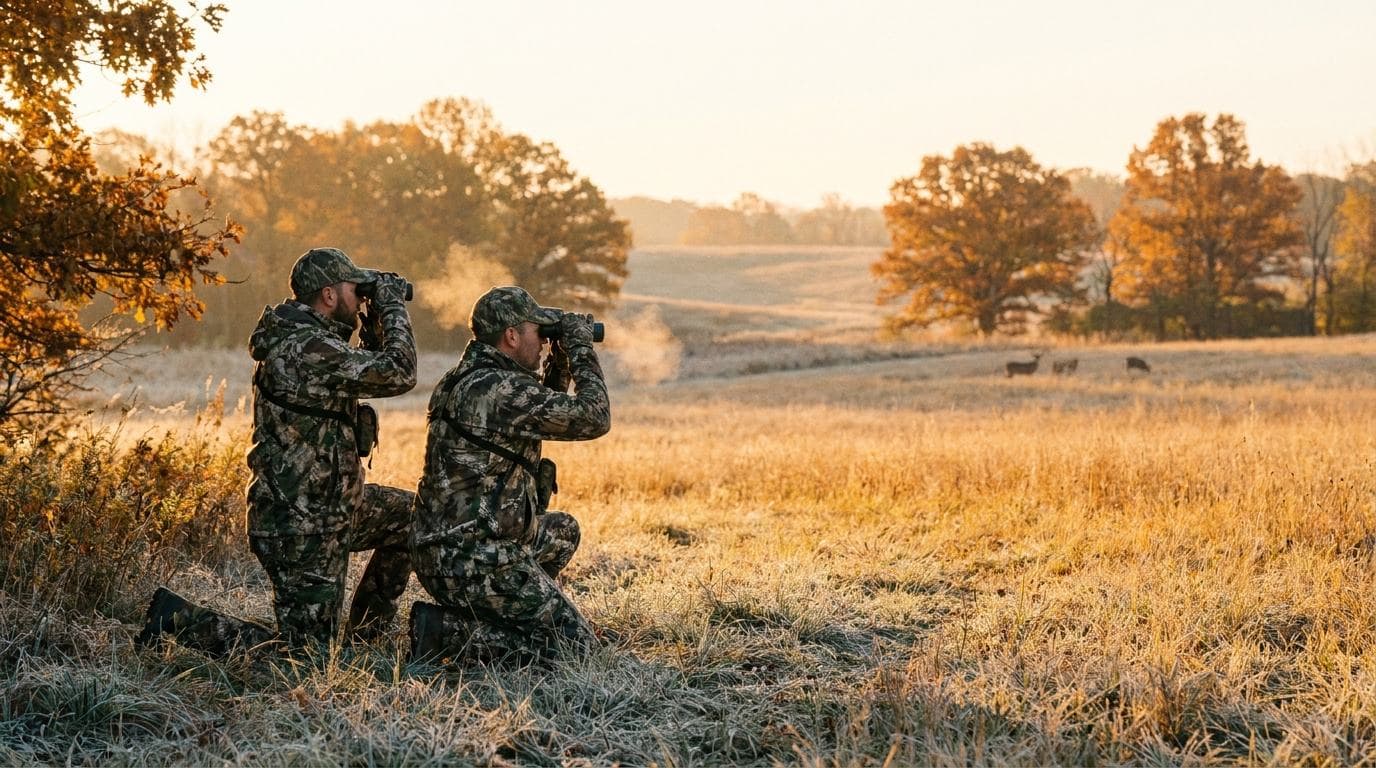
Booking a guided hunt is a significant commitment. A week-long elk hunt in a western state can run $4,000 to $12,000 before you factor in travel, tags, and processing. A guided whitetail or waterfowl hunt is a smaller investment, but you are still handing a deposit to a stranger based on a website and a phone call.
The difference between a good outfitter and a disappointing one is almost never the hunting ground itself. It is the operation: the preparation, the communication, the honesty about expectations, and the care taken with each client. Here is how to evaluate an outfitter before you send any money.
Verify Licensing Before the Conversation Goes Any Further
In most states, a commercial hunting guide or outfitter is required to hold a state-issued license. Requirements vary significantly: some states require licensing for any outfitter operating within their borders, others only for certain hunt types or above certain revenue thresholds. Check your target state's wildlife or parks agency directly to understand what applies.
Before you discuss pricing or availability, ask the outfitter for their license number and the state agency that issued it. Then look it up. Most state agencies maintain a public database of licensed outfitters. If the outfitter gives vague answers, claims exemption from licensing without an explanation you can independently verify, or cannot produce a license number, stop there. This check takes five minutes and filters out a meaningful percentage of operations that should not be taking deposits.
Ask About Insurance — and What It Covers
A licensed outfitter should carry general liability insurance. Minimum requirements vary by state: Oregon requires at least $500,000 combined single-limit coverage per occurrence; Illinois requires $1,000,000. In practice, most reputable outfitters carry more than the state minimum.
What you are asking about is simple: if something goes wrong during the hunt — a vehicle accident on the way to the field, an injury in camp — is the operation insured? You are not auditing their policy; you are confirming that a professional standard of coverage exists. An outfitter who bristles at this question is telling you something.
Also ask if the operation requires a liability waiver before the hunt, which is standard and reasonable. Any legitimate outfitter will send it ahead of time on request so you can read what you are signing.
Ten Questions That Separate Good Outfitters From the Rest
After licensing and insurance are confirmed, these ten questions will tell you most of what you need to know about whether an operation is right for you.
- What is your primary species, and is this your featured hunt? Many outfitters guide multiple species, but most operations are genuinely excellent at one or two. An outfitter whose core business is mule deer taking elk clients as a secondary offering is a concern regardless of the price.
- What was your actual harvest success rate last season? Not a lifetime average, not a good-years figure — last season specifically. A credible outfitter will give you a real number without hesitation.
- What counts as success in that rate? Some outfitters count every client who fired a shot; others count harvested animals only; others count animals spotted or "opportunities." You want the harvest rate — tagged animals home — not the broadest possible definition.
- Can I have three to five references with phone numbers from last season's clients? Recent references from people who hunted the same species you are booking. Do not accept a list without phone numbers, or one drawn entirely from a single lodge's trophy room.
- What is the hunter-to-guide ratio? For spot-and-stalk or tree-stand hunting, a one-to-one ratio is ideal. Two-to-one is manageable; higher than that warrants a direct question about how the operation handles simultaneous opportunities in the field.
- Walk me through a typical hunting day. Start time, how you travel to the field, what midday looks like, when you return to camp. A well-run operation can describe this clearly. Vague or inconsistent answers suggest the opposite.
- What is included — meals, accommodations, transportation, field dressing, and meat processing? And what costs extra? Cape fees, trophy fees, taxidermy referrals, and processing are common add-ons that can significantly change the total. Get the full picture before comparing prices across outfitters.
- What are your deposit and cancellation terms, in writing? Standard deposits run 25 to 50 percent at booking, with the balance due before the hunt. Cancellation policies vary widely. Get the terms in your booking confirmation, not just verbally.
- Are you licensed by the state, and can you give me your license number? This should be comfortable for any legitimate operation to answer immediately. A defensive or evasive response to a simple documentation request is a red flag.
- How do you communicate with clients in the months before the hunt? Pre-hunt communication — a gear list, conditioning guidance, tag draw information, what to expect on arrival — separates outfitters who care about client success from those who go quiet until a week before you fly out.
Reading Success Rates Honestly
Success rates in guided hunting require context to mean anything. On fair-chase public land elk hunts, a strong outfitter might run a 40 to 60 percent harvest rate depending on the unit, season, and weapon type. The national DIY average for elk on public land sits around 10 to 15 percent, so a guided hunt with a reputable operation meaningfully improves your odds — without removing the variable of a wild animal in its own terrain.
High-fence and private-ranch operations often advertise 85 to 90 percent success rates, which reflects the controlled nature of the property. These are legitimate hunts with a different character than free-range or fair-chase hunting. Know what you are buying and choose accordingly based on what kind of experience you are after.
Be skeptical of any outfitter who guarantees a harvest on a free-range hunt, or who advertises 100 percent success without explaining that it applies to high-fence or semi-controlled conditions. An outfitter honest about the variability of wild game hunting is more trustworthy than one who papers over it with a marketing promise.
Making the Reference Call Count
Most people who call references ask the wrong question. "Did you have a good time?" is too easy to answer yes. Here is what to ask instead:
- "Did the terrain, camp, and conditions match what you were told when you booked?"
- "How many other hunters were in camp during your week?"
- "How much time did you spend one-on-one with a guide versus hunting on your own?"
- "Would you book this outfitter again — and have you?"
- "Was there anything that surprised you, good or bad, that you wish you had known before the trip?"
The last question is the most useful. It surfaces both genuine selling points and hidden friction that a polished reference list might otherwise smooth over. An outfitter with strong repeat-client rates — references who have booked the same operation two or three consecutive seasons — is demonstrating something real about the quality of the experience that no marketing material can replicate.
Deposits, Contracts, and Protecting Your Investment
A booking deposit is standard and reasonable. It is also the moment of highest financial risk before the hunt begins. A few things to confirm before you send money.
- Get the full booking terms in writing: cancellation policy, rescheduling options, and refund conditions if the outfitter cancels or fails to deliver the agreed services.
- For high-value hunts — a full-week western elk trip, a waterfowl lodge booking, or any international hunt — consider travel insurance with a trip cancellation rider. These products are widely available and worth the premium when a single trip represents a significant portion of your annual outdoor budget.
- Pay with a credit card where possible. This preserves a charge-back option in the event of a clear breach — an outfitter who cancels with no refund, or who fails to deliver what was specified in the contract.
Booking Direct Versus Through a Marketplace
Booking through a hunting marketplace or aggregator is convenient, but it adds a layer between you and the operation. When you book direct, the outfitter has your contact information before day one, knows your experience level and goals from the first call, and can tailor the hunt accordingly. You are a known client with a direct line to the person who will be guiding you — not a reservation number.
Outfitters running at full capacity through repeat clients and word-of-mouth referrals rarely need to pay a commission to an aggregator. The operations most visible on booking sites are often the ones with open inventory — not a disqualifier on its own, but worth noting as you evaluate how a given operation builds its client base and whether it is in demand.
Whether you find your outfitter through a referral, a sporting publication, a state licensing board list, or a search that brings you here, the vetting process is the same. A strong outfitter will welcome every question you have — because they have confident answers ready. For more on what to expect once you have booked, what to pack, and how to prepare, browse the rest of the trip planning guides here.