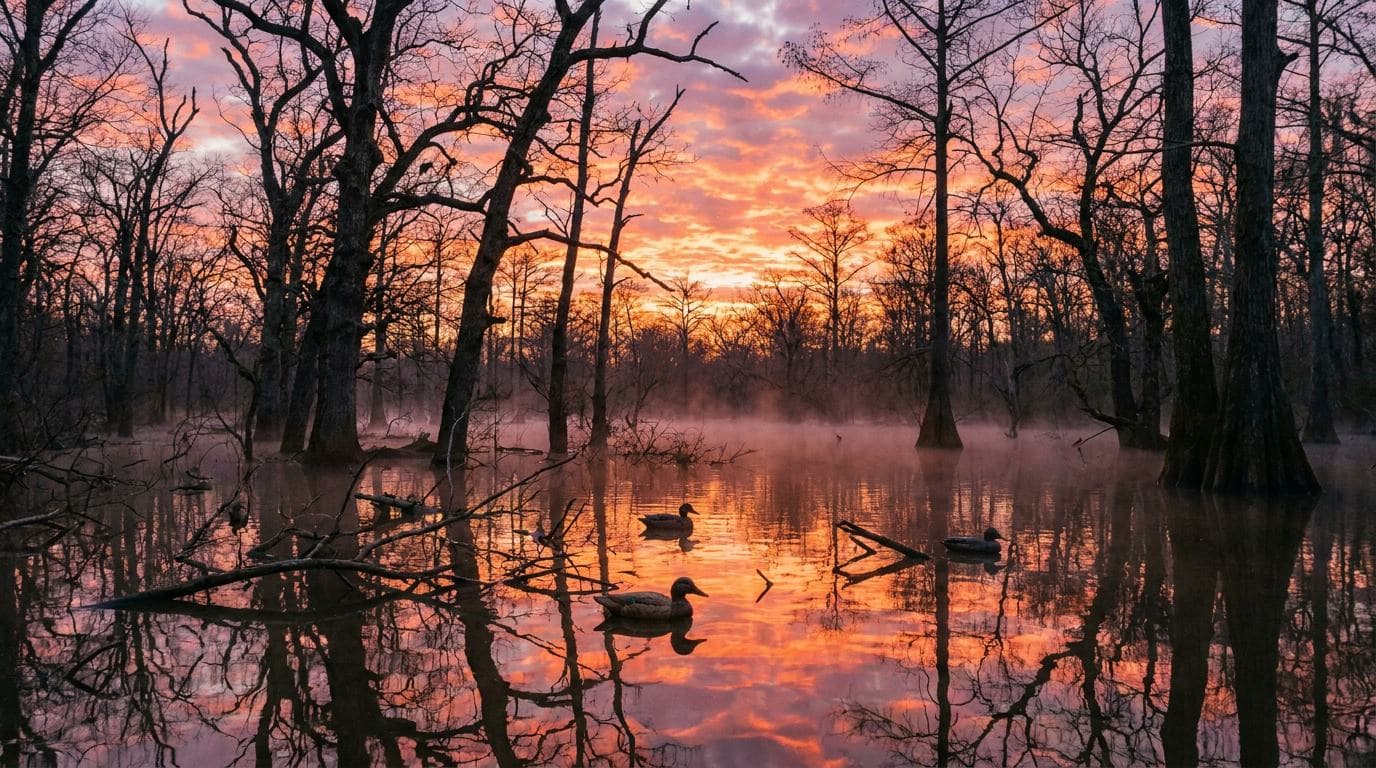
Why Stuttgart Is Ground Zero for Duck Hunting
Stuttgart, Arkansas calls itself the Duck Capital of the World, and the Grand Prairie region around it backs that up. Flooded rice fields, greentree reservoirs, and true flooded timber sit in the middle of the Mississippi Flyway, right where mallards stack up by the tens of thousands each winter. It's the trip most serious waterfowl hunters put on a list at some point — the question is season timing, real cost, and what a morning in the timber actually looks like.
2026–27 Season Dates
Arkansas Game and Fish Commission splits the regular duck season into three segments for 2026–27:
- Nov. 21–29, 2026 — an early split
- Dec. 10–23, 2026 — the mid-season split
- Dec. 26, 2026–Jan. 31, 2027 — the long back half of the season, when timber holes are usually flooded and mallard numbers peak
Most guides steer new clients toward late December through January. That's when flooding is most reliable and birds have settled into their winter pattern. Book early in the season and you're gambling on water levels; book too late and you're gambling on whether birds are still moving.
What a Guided Hunt Actually Costs in 2026
Prices around Stuttgart vary by how much is bundled in. A short afternoon hunt with no lodging runs cheaper than a full package with meals and a bunk.
| Package type | Typical 2026 price | What's usually included |
|---|---|---|
| Half-day / afternoon hunt, no lodging | $250–$325 per hunter | Guide, blind, decoys, transportation to the hole |
| Full-day guided hunt with one night's lodging | $500–$650 per hunter | Morning hunt, lodge bunk, meals, bird cleaning |
| Multi-day flooded timber lodge package | $1,200–$2,500+ per hunter | Multiple hunts, full board, dog work, processing |
Flooded timber holes — the classic Stuttgart image of hunters standing waist-deep among flooded oaks — usually cost more than open-field hunts and often depend on water conditions that year. Ask your outfitter directly whether timber is part of your package or an add-on; don't assume it from the marketing photos.
Licenses and Stamps You'll Need
Non-resident waterfowl hunters need to stack a few credentials before opening morning. Budget for all of them separately from your hunt cost:
- Arkansas non-resident hunting license — $100 for one day, $175 for three days, $225 for five days, or $410 for an annual all-game license
- Federal Duck Stamp — $25, valid July 1 through June 30
- Arkansas Nonresident Waterfowl Stamp — $50
- HIP certification — free, but required for every migratory bird hunter
Most outfitters walk first-timers through this list when you book, and some sell short-term licenses on-site. Confirm it in writing before you fly in — a guide can't hunt you without the right paper, no matter how good the blind is. This is general orientation, not legal advice — fees and requirements shift year to year, so double-check current rules directly with the Arkansas Game and Fish Commission before you travel.
What to Expect on the Hunt
Mornings start early — a 4 a.m. wake-up and coffee before a boat or mule ride out to the hole in the dark isn't unusual. You'll set up in the blind or wade into timber before shooting light, decoys already out from the guide's scouting the evening before. Shooting light brings the first flights, and a good morning in prime season can wrap by mid-morning once the birds stop moving.
Guides call the shots on timing here more than almost any other hunt type — when to call, when to stay quiet, when to shoot. Listen to your guide's cadence before you pull the trigger; timber hunting rewards patience over enthusiasm.
Tipping and Etiquette
Standard waterfowl guide tips run $50–$100 per hunter per day, more for an exceptional hunt or a guide who's also running dogs and doing the cleaning. Bring cash — most lodges don't handle tips through the same payment as your package. For a deeper breakdown of ranges and when they shift, see how much to tip a hunting guide.
Show up on time, follow the guide's calling and shooting instructions, and don't shoot until told to. A flooded timber hole holds a limited number of guns for a reason — the guide is managing the hunt for everyone in the blind, not just you.
What to Pack for the Timber
Stuttgart mornings in December and January sit anywhere from the teens to the 40s, and you'll likely be standing in water part of the hunt. Chest waders are non-negotiable for timber hunts — not hip boots, not waterproof pants. Layer under them: base layer, insulating mid-layer, and a windproof outer shell that won't rustle when a flock circles.
A few things first-timers forget:
- Insulated, waterproof gloves you can still shoot in — your hands go numb fast standing in flooded timber
- A face mask or camo paint; pale skin looking up spooks circling ducks
- An extra pair of dry socks and gloves in a dry bag back at the truck or blind
- Your own shotgun and non-toxic shot shells, unless the outfitter confirms rentals are available
Most lodges provide decoys, calls (though bring your own if you have a favorite), and transportation to the hole. Confirm what's covered when you book so you're not caught improvising at 4 a.m.
Getting There and Booking Timeline
Stuttgart sits roughly ninety minutes from both Little Rock and Memphis, making either airport a reasonable landing point. Most out-of-state hunters fly into one, rent a vehicle, and drive in the evening before their first hunt.
Book the back half of the season — late December through January — at least three to four months out if you want flooded timber specifically. Lodges with reliable water and a strong guide-to-hunter ratio fill those weeks first, and water levels that year can shift availability further once the season's already underway.
Choosing the Right Outfitter
Not every Stuttgart-area operation runs the same quality of hunt. Ask about their water access (leased versus public), how many hunters share a blind, whether flooded timber is guaranteed or conditional, and their weather/cancellation policy before you put down a deposit. How to choose a hunting outfitter covers the full question list, and your first guided duck hunt walks through the day itself in more detail.
A good outfitter will answer these questions before you ask twice. If they dodge specifics on water access or hunter ratios, treat that as your answer.