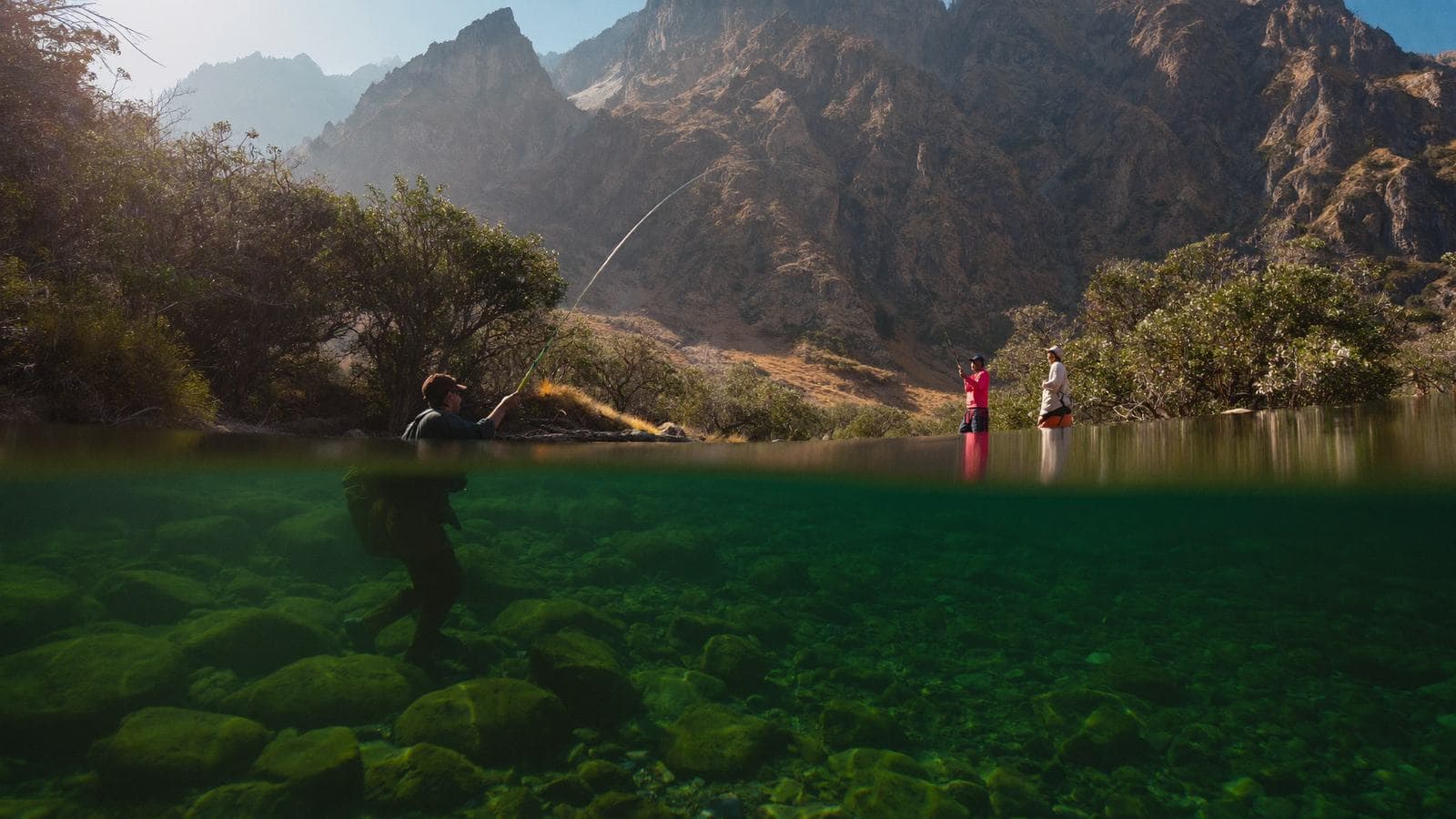
Fly fishing looks technical from the outside. The casting, the line management, the Latin-named hatches. None of it matters as much as it looks on your first guided trip. Knowing how the day actually unfolds will help you relax into it faster — and catch more fish.
How the Day Starts
Most guides want you at the meet point by 7:30 or 8 a.m. Don't be the person who's five minutes late. The guide has timed the morning: early light, cooler water temps, fish feeding close to the surface before the sun gets high. Missing the first hour cuts into the best window of the day.
Before you wade in, your guide will spend 15 to 30 minutes on the bank going through the basics. How to hold the rod, the overhead cast, the roll cast if you'll need it, how to mend line, what a take looks like, how to set the hook. This isn't filler. It's the part that makes the rest of the day work.
If you've never fly fished before, say so upfront. Your guide will calibrate from there. Guides who work with beginners every week know how to build the cast from zero. The ones who struggle are clients who say "I've done a little" and turn out to have none. Set accurate expectations and let the guide meet you where you are.
What the Guide Provides
Rod, reel, line, leaders, flies, waders, and wading boots. You don't need to own any gear for a first guided trip, which is one of the main advantages of going with a guide before you invest in equipment.
Some outfitters charge separately for wader rental ($50 to $75 is common at larger shops). Most include everything in the trip price. Confirm when you book so there are no surprises on the morning of your trip.
The flies are part of what you're paying for. Your guide will pick the pattern based on what's hatching, water temperature, and what they've seen working that week on this stretch of river. You don't need to understand fly selection on day one. Let them choose, and ask why when you're between casts. That's a free lesson.
What You Need to Bring
Your fishing license. Every state requires one, and many trout fisheries require a separate trout stamp on top of it. Check your state fish and wildlife agency's website before you go. Ask your guide exactly which licenses apply to the water you'll fish — do this at booking, not the morning of your trip.
Polarized sunglasses. These let you see into the water, spot fish, and protect your eyes from a fly moving fast in your direction. Your guide usually has a loaner pair if you forget, but bring your own if you have them.
Layers. The temperature on a mountain trout river at 7 a.m. is almost never what the afternoon high will be. Dress for the start of the day:
- Base: synthetic or merino wool. Not cotton. Wet cotton stays cold and makes a cold morning worse.
- Mid: a fleece or light puffy you can tie around your waist when the sun comes up.
- Shell: a rain jacket. Spring and fall especially, since weather on mountain streams changes without much warning.
Add a brim hat, sunscreen on your neck and the backs of your hands, a water bottle, and a snack. That's the full list.
Once You're in the Water
The guide will position you and tell you where to cast. Follow those directions precisely. "Cast to that rock, two feet upstream" has precision built in. If you land three feet off, adjust. The guide is reading the water in real time and knows where the fish are holding.
For the first hour or two, you'll be figuring out the cast. This is normal. Fly casting has a steeper learning curve than spin or bait fishing, and the first dozen casts will feel wrong. Keep listening to the corrections your guide offers, because they're watching your mechanics and fixing specific things. Casting harder doesn't help. Most beginners throw too hard. The cast opens up when you slow down and let the rod load.
When a fish takes the fly, you'll feel a pull or see the line go tight. The instinct is to jerk hard. Don't. Trout mouths tear easily, and a hard hookset with fly gear pulls the hook out more often than it drives it in. Your guide will say "set" or "strip" — learn what those mean at the beginning of the day so you're not processing language when a fish is on the line.
What You'll Learn by Watching
The guide reads water constantly. Watch where they look before they tell you where to cast: the seam between fast current and slow, the slack water behind a large rock, the deep pool at the base of a riffle where trout stack up in low light. Ask why between casts. Most guides are glad to explain the reasoning.
By the second or third hour, you'll start recognizing the same features on your own. This is one of the underrated returns on a guided fly-fishing day. You're not just fishing. You're watching someone who knows this water work it in real time, and that mental model of trout habitat stays with you on every future trip.
Half-Day or Full-Day for Your First Trip
Half-day. Four hours on the water is enough to learn the cast, figure out the drift, land a few fish, and not come off the river exhausted. Wading in a current works muscles you don't normally use, and the quality of attention a first-timer can sustain drops sharply after lunch on a full-day trip.
Book a full-day once you've done a half and know you want more time. If you're set on full-day from the start, plan for the shore lunch break your guide will offer, and reapply sunscreen at midday.
Tipping
Pull cash before your trip. Guides earn their base rate from the outfitter; the tip is a direct signal from you about how the day went. The standard range is 15 to 20% of the trip cost, handed to the guide at the end of the day.
On a $250 half-day, that's $37 to $50. On a $450 full-day, it's $67 to $90. Base it on how hard the guide worked, not just on whether you caught fish. Some days the fish don't cooperate regardless of what anyone does. If your guide stayed patient with your casting, moved you to three different spots looking for fish, and kept the day from feeling like a failure, that's a 20% tip.
When you're vetting guides, ask directly how often they fish with first-timers — a guide who teaches well will have a ready answer. 12 Questions to Ask Before You Book a Fishing Guide covers the rest of that conversation.
One Thing Worth Knowing Before You Go
Your guide is not judging your cast. They've seen every version of a first day on the water — beginners who land 15 fish on sloppy casts, experienced spin anglers who struggle to mend line, people who've read every book and still can't feel the take. The guide has seen all of it, and their job is to make your day work with whatever you bring to it.
Follow the instructions, ask questions between casts, and resist the urge to fish the way you fish with conventional gear. Let the guide show you how fly fishing actually works. By the time you're back at the car, you'll already be thinking about the next one.