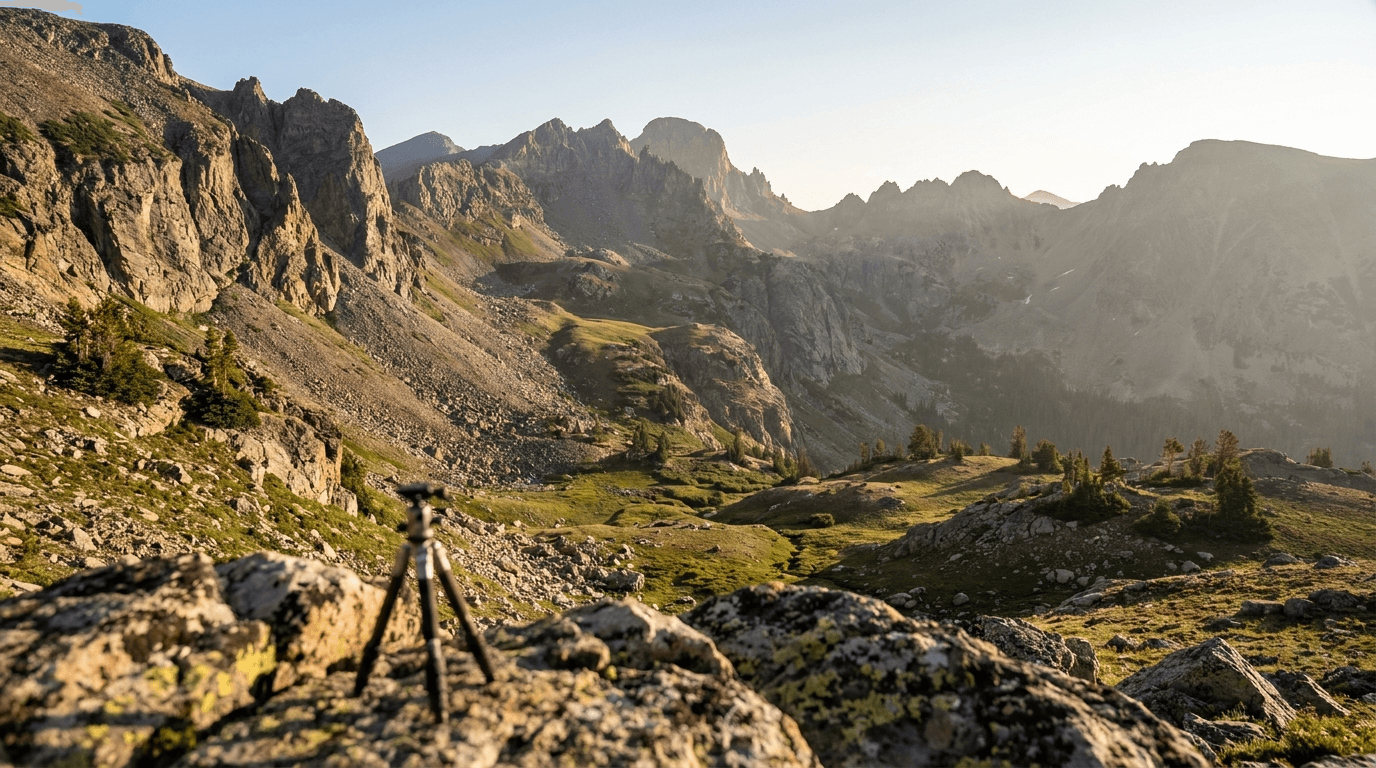
A sheep or goat tag doesn't come around often. Draw the odds right and you might see one every eight to twelve years; in plenty of units the honest answer is once in a lifetime. That math changes how you prepare. There's no next season to apply the lessons to, no filing this year away as practice. The hunters who fill these tags almost always know where the animals live before they ever load a pack — and that knowledge gets built weeks or months out, not on opening morning while you wander a drainage hoping something white steps out of the rock.
More than any other Western hunt, sheep and goats are a glassing exercise first and a hiking exercise second. The country is too big and too vertical to cover on foot in the handful of days most of us get. You find animals with optics, from a long way off, then build a stalk around what the terrain and the wind allow. All of it starts well before the season does.
These Tags Are Filled Before the Opener
Rams and billies live in small, defined pockets of a unit: a handful of basins, a cluster of cliff bands, a bench or two that offers feed with an escape route into rock a few seconds away. They don't spread across the ground the way elk or deer sometimes do. A unit can look enormous on the map and still hold huntable animals in a fraction of it.
Pre-season scouting is how you find that fraction. Locate the water, the bedding cliffs, and the feeding benches before your hunt days start burning, and you walk in already knowing which two or three basins deserve your time. Skip that work and you'll spend half the season learning ground somebody else mapped in July.
Start With Imagery, Not a Trailhead
Before a boot touches the mountain, put real hours into satellite and topo layers. You're looking for the terrain signatures these animals use: south- and west-facing slopes with rock close by, benches broken up by ledges, saddles connecting two basins, anything that reads steep, broken, and defensible. Goats run even more vertical than sheep — cliff bands and scree that no other big game will touch.
Mark water while you're at it. In dry country, springs and seeps that show green on summer imagery are worth flagging even when they aren't obviously running. Many quit without warning as the season wears on, so note a few backups per basin instead of betting everything on one source. If you can cross-reference recent precipitation, do it. A wet spring puts animals on different water than a drought year does.
Read the Ground the Way the Animal Does
Once you have candidate basins marked, think in daily patterns rather than single sightings. Sheep and goats tend to feed on open benches and ridgelines through the first hour or two of light, bed in shaded cliffs or under overhangs through the heat, then drift back toward feed and water in the evening. A basin that looks empty at eleven in the morning can be holding animals fifty yards inside a shadow line you'd never pick apart without good glass.
Escape terrain matters as much as feed. Both species stay close enough to vertical rock that trouble means a short sprint to safety, never a long run across the open. When you're guessing at bedding areas, look for spots that combine visibility with an immediate route into broken rock. That combination is why the same basins hold animals year after year.
Glass Systematically or Don't Bother
Set up before first light on a vantage that lets you see into more than one basin without moving. Then work the country in order instead of scanning wherever your eye wanders: skyline first, down through the ridgelines, across the open slopes, and into the shadowed cliff bands and crevices last. The shadows are where animals hide from weather and predators both, and where a fast scan misses everything.
A few habits separate productive sits from wasted mornings:
- Keep the sun at your back whenever the terrain allows. Glassing into the light kills detail and burns your eyes out by nine.
- Put your binoculars on a tripod. Handheld glass shakes just enough at real magnification to blur the exact detail you need. Mounted, you can study a shape instead of losing it.
- Let the spotter finish what the binos start. When something catches your eye — an odd patch of color, a shadow that doesn't match the rock around it — hold the spot and bring the spotting scope onto it rather than straining at low power.
- Sit longer than feels productive. Most missed animals were there the whole time. The glasser moved on before the terrain gave them up.
The Optics Carry This Hunt
This is the one category where cutting corners costs animals, not just comfort. A quality 10x binocular is the right baseline — pack-friendly, handheld when it needs to be, strong enough to cover big country from a tripod. Glass in the Vortex Razor class or better resolves detail at range that mid-tier optics simply won't. Pair it with a spotting scope in the 20-60x range, and take the 85mm objective if you can carry the weight: that front glass keeps a spotter working through the low-angle morning and evening hours when animals are on their feet, and it matters more than you'd expect once you're trying to count growth rings or judge mass at 1,500 yards.
Angled spotters beat straight bodies in this terrain, even with the adjustment period. They let you run the tripod lower and glass comfortably seated or prone on a slope, which is most of what mountain glassing turns out to be. A solid tripod and a harness that keeps the glass on your chest instead of buried in the pack round out the kit.
Judging Rams and Billies at Distance
Legal-size rules vary by state and by unit. Many Western states set a curl threshold for rams — three-quarter curl is the number you'll hear most — while others go by age or horn length instead. Don't assume last year's rule survived the regulation cycle. The only source that counts is the current-year booklet from the agency that issued your tag.
Judging is exactly why the serious spotter earns its weight. Separating a legal ram from a young one comes down to mass and curl progression, neither of which resolves through binoculars at hunting distances. Goats bring their own puzzle: billies typically carry thicker, more evenly tapered horns on a blockier frame, while nannies often show a sharper hook near the tip. Put the hours in behind the spotter before you ever commit to a stalk.
Turn Sightings Into a Plan
Log everything.
Which basin, what time, wind direction, what the animal was doing when you found it. One sighting means little; a pattern across two or three scouting trips tells you where your hunt days belong. A basin that produces on more than one visit is a priority, not a maybe.
Then start thinking past the glassing points to the approach. Where can you get above an animal without being skylined? Where does the wind sit at the hour you'd realistically be moving? Sheep and goat country punishes a rushed stalk harder than any other ground — the same terrain that lets you glass a ram from a mile off lets that ram watch you coming just as far. And respect what this country does to your feet: a stiff-soled mountain boot built for sidehilling loose rock will save your ankles over a multi-day scouting trip, and it's not the place to shave weight.
None of this replaces time behind the glass on the mountain itself. Imagery gets you close; watching a basin come alive at first light is what turns a map study into a plan. Treat scouting as the first phase of the hunt rather than a separate chore, and your season days shift from searching to closing.
When to Hunt It With a Guide
There's a case for doing this one outfitted, and it isn't about skill. A guide who lives in sheep country has the pattern data you're trying to build in three weekends — years of knowing which basins hold rams in September, where the water still runs in a dry stretch, which approaches the wind forgives. On a tag you waited a decade for, that knowledge is worth more than any piece of gear you could buy. Some states settle the question for you: Alaska, for one, requires nonresidents to hunt sheep and goats with a registered guide or a close resident relative, so check the current rules wherever you draw. If you go that route, book with an independent outfitter directly. The guides who run their books on Timber & Tackle own their calendars and their client lists, and the price you pay goes to the person taking you up the mountain. Either way, the habits above still count — the best guided hunts happen when the hunter shows up already knowing how to sit behind glass. For more on planning a guided trip, the rest of the guides hub is worth a read.