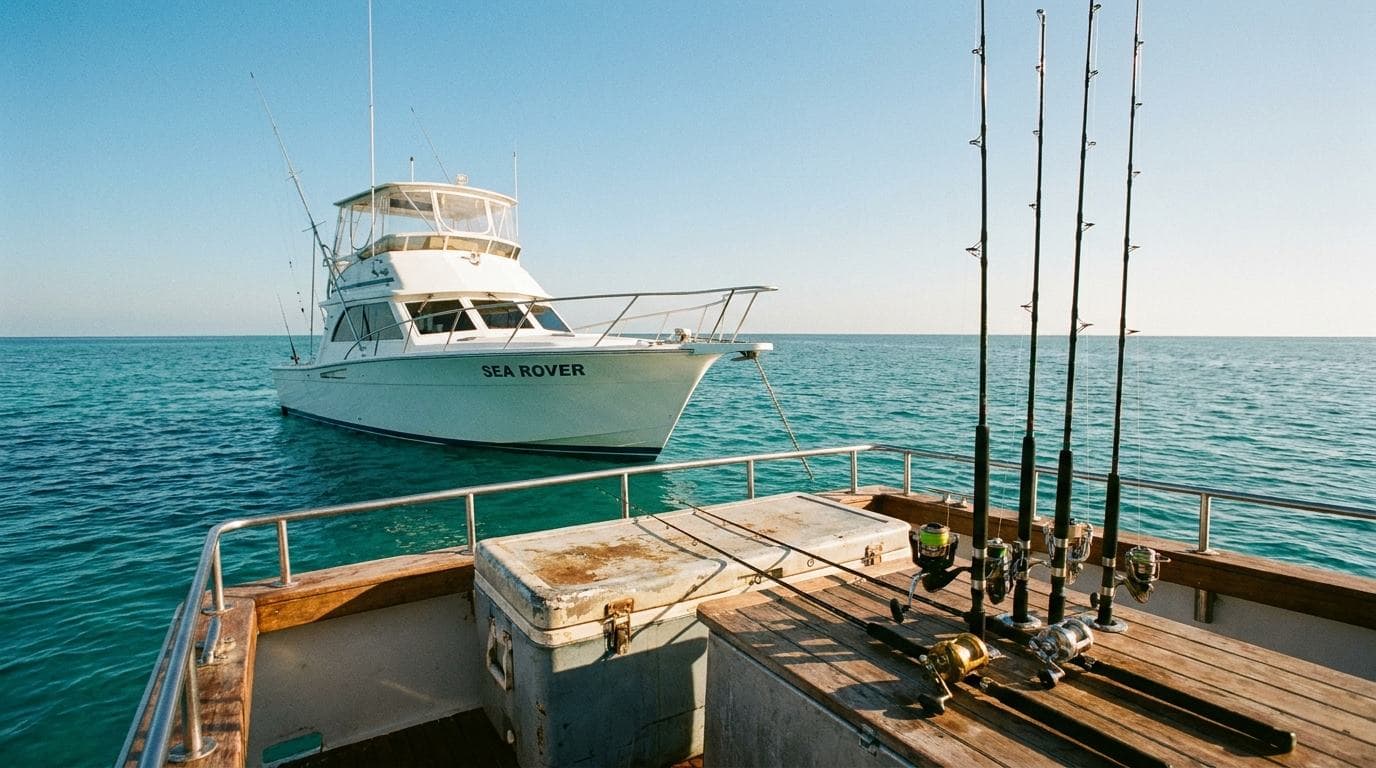
Most charter captains can tell within the first ten minutes whether someone packed well or packed for the wrong trip. The guests boarding an offshore run in flip-flops with no sunscreen are a recognizable type. The ones with spray sunscreen are going to be asked to put it away.
Fishing charters provide almost everything you need to catch fish — rods, reels, bait, terminal tackle, coolers — but they can't provide what you forgot. Here's what to pack, what to leave at the dock, and where inshore and offshore trips require different preparation.
The universal list
These items belong on every charter trip regardless of whether you're chasing redfish on a Carolina flat or trolling for mahi 30 miles offshore.
Footwear
Non-skid rubber soles only. Sneakers work. Boat shoes work. Flip-flops don't — they slip on wet decks and most captains will say something if you board in them. Whatever you wear, expect it to smell like fish by noon.
Sunscreen
Minimum SPF 50. The restriction most guests miss: no spray sunscreen. On the water, spray drifts onto the deck and creates a slip hazard; it also discolors fiberglass. Apply at home before you board, bring a lotion or stick version for reapplication, and put it on again around 10 AM whether you feel the burn or not. A cloudy morning on the water isn't protection — UV reflects off the surface and hits from angles that shade never covers.
Hat and polarized sunglasses
A wide-brim hat covers your ears and neck, which most baseball caps leave exposed. Polarized lenses cut the surface glare and let you see into the water — useful for spotting fish and necessary for protecting your eyes on a full day out.
An opinion the sunglasses ads won't give you: for a charter deck, a $22 pair of polarized glasses does about 90% of what a $250 pair does. Premium glass earns its price when you're sight-fishing flats every weekend. For a guest on a charter — where the most likely fate of any pair is the bottom of the Gulf — buy the cheap polarized pair and put the difference toward the tip. Gear lists that steer you to the expensive pair are usually earning a commission on the click; a deckhand would tell you to bring the ones you can afford to lose.
Dry bag or waterproof pouch
Your phone, wallet, and car keys should be inside something that can take a direct splash. A basic dry bag runs $15–$25 at any outdoor retailer. It's one of the most consistent ways to prevent an expensive problem.
Water and light snacks
Most captains ask guests to bring their own drinks. Water is the priority — a full day in the sun on moving water dehydrates faster than most people expect, so bring more than feels necessary. Snacks should be easy to eat one-handed and unlikely to blow across the deck in a chop.
A backup set of clothes
One change of clothes in a dry bag, left in the car or the cabin. If you get soaked on a rough offshore return or step in the wrong place, you won't regret having dry clothes for the drive home.
The whole kit, priced: under $75
None of this requires an outfitter run. Everything on the universal list that you don't already own comes home from one stop at a big-box store:
- Basic dry bag: $18
- SPF 50 lotion: $12
- Sunscreen stick for reapplying: $9
- Polarized sunglasses: $22
- Bonine (meclizine): $8
That's $69 total — call it a kit for under $75 — and it covers the five most common ways a charter day goes sideways: the soaked phone, the burn, the glare headache, and the seasickness that ends trips early. Against a charter that cost your group several hundred dollars, it's the cheapest insurance on the whole trip.
Seasickness: the section most packing lists bury
Seasickness ends more good fishing trips than bad weather does. It's also the most preventable problem on this list — because most people who get sick on the water waited too long to address it.
Picture how it usually goes. Take a guest on a full-day offshore trip who felt fine at the dock, skipped the pills, and had a big breakfast on the drive down. Forty minutes into the run the boat starts working a beam sea, and by the time the first lines go out he's pale, parked on the cooler, staring at the horizon. There's no fixing it out there — the medication needed to be in his system the night before. The boat doesn't turn around for one sick guest on a shared trip, so he rides out seven more hours while everyone else fishes. Every crew has seen a version of that day, and every version of it was preventable at the drugstore.
If you've ever felt queasy in a car, on a plane, or on any boat, prepare before you board:
- Dramamine or Bonine (meclizine): Both work. Bonine causes significantly less drowsiness and is the better choice for a full day when you need to stay alert. Take it the night before, not the morning of the trip — it needs time to absorb. Take another dose the morning of departure. If you wait until you feel nauseous on the boat, you've already missed the window.
- Scopolamine patch: A prescription medication worn behind the ear that lasts up to 72 hours. Worth discussing with your doctor before a multi-day offshore trip or if over-the-counter options haven't worked for you.
- Acupressure wristbands: Sea-Bands and similar products work reliably for some people and do nothing for others. They're inexpensive enough to be worth trying alongside medication, especially for a first offshore trip.
One practical note on the night before: a heavy meal and alcohol before an early offshore departure is a bad combination. Eat light, sleep well, and take the medication the night before — not at the dock when you're already feeling the boat move.
Inshore fishing charters: what's different
Inshore trips typically run four to six hours on protected water — bays, estuaries, rivers, the flats. The boat is smaller, the conditions are calmer, and seasickness is rarely a problem unless you're particularly prone. A few additions that matter for inshore specifically:
- Insect repellent: Morning trips in marshy areas can be heavy with mosquitoes, especially in the Lowcountry, the Louisiana marshes, and the Florida backcountry. A small bottle in a side pocket costs nothing and makes the early hours considerably more comfortable.
- Light windbreaker: Early mornings on a moving skiff in fall or spring hit harder than the weather app suggests. Even in the South, wind chill at 25 mph on the water is real.
Most inshore captains supply rods, tackle, and bait. Confirm before you try to bring your own gear — the captain's setup is matched to the target species and water conditions, and there may not be space for extra equipment on a small skiff.
Offshore fishing charters: what's different
Offshore trips run longer — typically eight to twelve hours — and put you in open ocean, which means more spray, more sun, greater motion, and significantly higher seasickness risk. The packing list expands.
- Extra layers: Even on a warm-day forecast, the run out to the grounds at dawn at 25 knots creates genuine wind chill. A light jacket or windbreaker goes in the bag regardless.
- Extra shirt: Offshore fishing is wet. Bring one clean shirt to change into for the ride home.
- Sunscreen stick: Plan to reapply every 90 minutes. Offshore sun exposure is harder than most inshore or inland anglers are used to — open water reflects UV from all directions, not just overhead.
- Antacid (optional): The combination of diesel fumes, boat motion, and an empty stomach can create problems even for people who aren't typically prone to seasickness. A roll of antacids is cheap insurance.
Confirm at booking whether lunch and drinks are included on your offshore trip. A 10-hour day at sea without a food plan is a mistake most people make once. Many full-day offshore charters include lunch; some don't — ask directly.
What to leave at the dock
- Spray sunscreen — always. It's a slip hazard and damages fiberglass.
- Glass bottles — most charter boats prohibit them. Bring canned drinks or bottles with secure caps.
- Hard liquor unless you've confirmed the captain allows it. Policies vary, and some captains operate under USCG regulations that restrict open containers.
- Your own fishing rod unless you've specifically arranged it with the captain. Charter setups are matched to the trip type; an extra rod may not fit the plan or the space.
The fishing license question
For most saltwater charter trips in U.S. coastal waters, passengers fish under the captain's federal for-hire license — you don't need your own saltwater fishing license when fishing from a licensed charter boat. That said, regulations vary by state, and a few states require individual licenses regardless of the vessel.
Ask at booking. A direct question — "Do I need my own license for this trip?" — takes 30 seconds and removes any ambiguity on the water. For freshwater guided trips, the situation is different: you almost always need your own state freshwater license, even when fishing with a licensed guide.
What the captain provides
Standard on most charters: rods, reels, bait, terminal tackle, coolers for your catch, and basic safety equipment. Many captains will fillet and bag your fish at the dock or direct you to a cleaning station nearby.
What varies: lunch and drinks, extra bait for specific techniques, and handling for larger species. Confirm the specifics when you book rather than assuming — a quick message before the trip is better than a surprised look at the marina.
Before you book, browse the rest of the guides library — how to pick a captain, what to tip, and what to expect on your first charter.