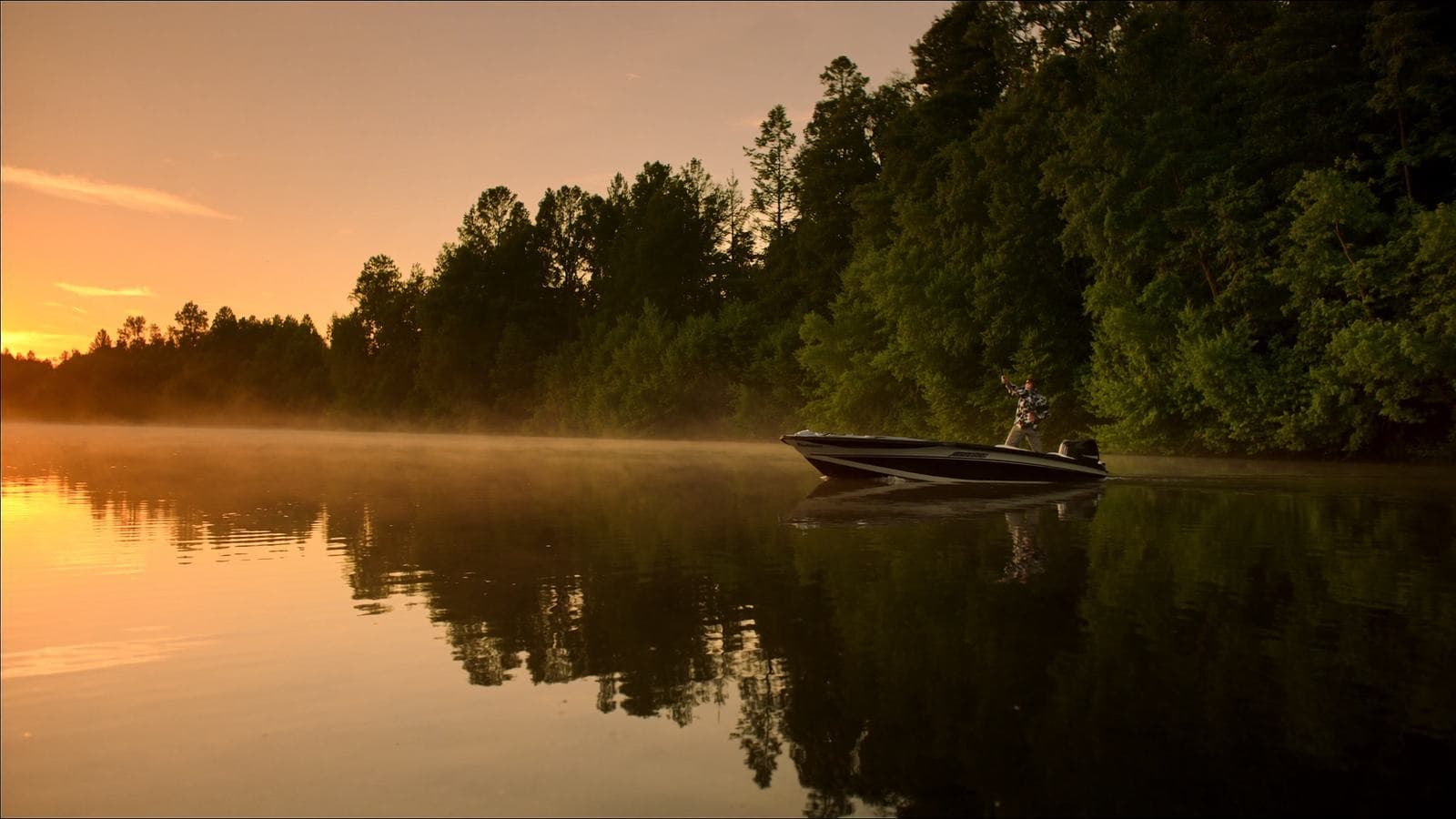
Most bass fishing happens in freshwater — reservoirs, rivers, natural lakes — which already separates it from the saltwater charters that most first-time fishing content is written about. A guided bass trip uses a bass boat, not a center console. The guide is working freshwater structure: laydowns, dock pilings, grass lines, submerged points, flooded timber. And most professional guides practice catch-and-release on quality fish, which means the largemouth you land at 8:00 AM is photographed and back in the water by 8:01.
If you've done an inshore or offshore charter and expect a similar format, this is different enough to be worth understanding before you show up at the ramp.
Booking: Half-Day vs. Full Day
Most bass guides offer a half-day (three to four hours) and a full day (six to eight hours). Half-day trips typically run $300–$450 for the boat — that's a flat rate, not per person. Full days range from $450–$650 depending on the guide and the fishery. Most bass boats fish two anglers comfortably; some guides cap at two for a better client experience, others will take three.
For a first trip, a half-day is a reasonable starting point if you're unsure whether guided bass fishing is your thing. But the full day has a genuine advantage: the first hour of almost every guided trip is the guide diagnosing conditions — checking water temperature, reading the shoreline, figuring out what the fish want. On a half-day, you might spend a third of the trip in that learning phase. On a full day, you're fishing with that knowledge for the last four or five hours.
Book direct when you can. Most guides maintain their own sites or take calls. Ask before you show up what time they launch for the season you're fishing, whether there's specific gear they want you to bring or avoid, and what a typical morning looks like. A two-minute conversation before the trip prevents most of the friction on the day itself.
What the Guide Brings, What You Bring
The guide provides everything you fish with: rods, reels, line, lures, terminal tackle, the boat, the trolling motor, and the local knowledge that makes it worth hiring one. Don't bring your own gear unless the guide specifically asks you to. Most guides run rods rigged for their specific water and that week's conditions, and asking to throw your own setup is a polite way to complicate their system.
What you bring:
- Your fishing license. Most states require you to have your own license on a guided trip — the guide's license covers operating the boat, not your right to fish. Check your state's requirements before the day. Some guides can sort this at the ramp, but it's cleaner to arrive with it handled.
- Polarized sunglasses. You'll spot fish, read the water, and avoid squinting into the glare for four to eight hours. Bring them regardless of the forecast.
- Soft-soled footwear. Bass boats have gel-coated decks that mark easily. Sneakers or soft-rubber water shoes are what you want — no hard soles, no open sandals.
- Sun protection. Hat, sunscreen, a long-sleeve layer or buff. Bass boats have no shade at all.
- Food and drinks. Most freshwater guides don't provide lunch on a day trip. A cooler or backpack with enough food and water for the day is appropriate — ask when booking whether there's space in the boat for a small cooler.
- Cash for the tip.
How the Day Runs
You'll meet the guide at a boat ramp, usually around first light. Summer guides often launch at 6:00 AM to fish before the heat shuts the bite down; fall trips might start at 7:00 or later. Show up ten minutes early. The guide has likely already pre-fished that morning and arrived with a plan.
Once on the water, the guide runs the trolling motor from the stern and positions the boat while you fish from the front deck. You cast. The guide watches what you're doing, adjusts the boat angle and distance from the cover, and calls out spots as you move. On a first trip, they'll rig rods based on what they expect to work and explain the presentations as you go.
Tell them your actual experience level before you book, not what sounds impressive. A guide who knows you've never pitched into cover before sets up a completely different day than one who assumes you have. The clients who catch the most fish aren't the best casters — they're the ones who are honest about where they are and open to adjusting. Most guides enjoy teaching the technique. Don't make them guess what you need.
The fishing involves repetition. You work the same kinds of cover — dock lines, grass banks, flooded timber — casting into likely spots, varying the retrieve until something responds. When the guide says to slow down, slow down. When they move the boat off a spot that looked productive and run to somewhere different, go with it. There's a reason. You won't always know what it is.
Catch-and-Release: What It Actually Means on a Guided Trip
Professional bass guides almost universally practice catch-and-release on quality fish. Trophy largemouth — anything over five or six pounds on most fisheries — go back quickly. This is how the best bass fisheries stay the best bass fisheries, and most serious guides care about the long-term health of their water as much as they care about your experience that day.
Photos happen fast. The guide handles the fish, you hold it for the shot, it goes back within a few seconds. If photos matter to you, say so when you book — some guides carry waterproof cameras, and knowing in advance means they're positioned to get the shot when it counts.
A productive day might mean landing fifteen to twenty bass with a handful of quality fish in the three-to-five-pound range. An exceptional day might include one fish that you'll still be talking about a decade later. A slow day might mean grinding through difficult conditions for eight or ten bass and a lot of near-misses. The fish don't read the weather forecast the same way the guide does.
What doesn't change between a great day and a slow one is the guide's effort. A good guide moves, adjusts presentations, and tries different things before noon if the bite is off. The day isn't passive.
Etiquette on the Boat
Don't touch a rod that's already rigged unless you're about to fish with it. Don't move gear around the boat without checking first. When the guide is rigging or swapping baits — a task that requires both hands and their attention — give them a moment before starting a conversation.
When tactics shift mid-day, go with it without debate. You won't always know why the guide makes the call they do. That's part of the deal.
Ask questions between casts. Most guides enjoy talking through why a particular bait works in certain conditions, how they read structure, what they're seeing in the water temperature that changes the approach. It makes the day richer, and it's some of the more interesting conversation you'll have on the water.
Tipping
The standard range is 15–20% of the trip price. On a $450 full-day trip, that's $67–$90. Cash is strongly preferred — it's cleaner than navigating a card reader at the ramp at the end of a long day.
Tip based on effort and honesty, not purely on how many fish you caught. A guide who fished hard in difficult conditions, communicated clearly, and moved aggressively to find fish deserves the full tip even on a slow day. The bite is outside both your controls. The quality of the guide's effort isn't.
Finding the Right Guide
If you want more context on choosing a guide before you book — what questions to ask, how to read reviews, what a fair cancellation policy looks like — the guides section here has more detail on the evaluation process. For bass fishing specifically, the most useful question to ask any guide is how long they've been working that particular lake or river. Local knowledge compounds over years. A guide who has fished the same reservoir through four or five distinct seasonal patterns understands it in a way that's hard to replicate, and that shows up in the quality of the day.