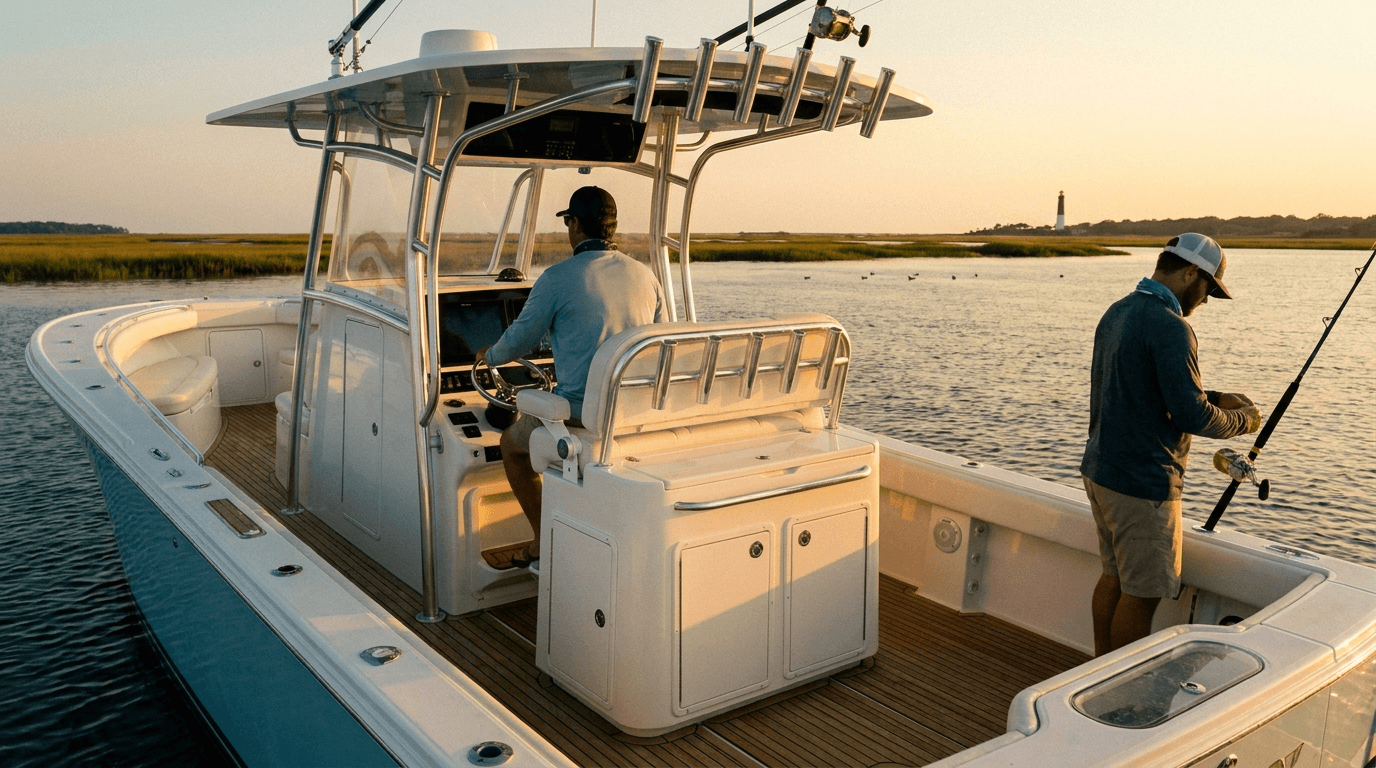
The Six-Pack Ceiling You Hit Before You Notice It
Most inshore and nearshore captains run under an OUPV license — the "six-pack" — which caps you at six paying passengers on an uninspected vessel. That number doesn't include crew. So the ceiling isn't really six clients. It's six clients plus whatever one person can do at the same time: run the boat, rig the lines, net the fish, untangle a kid's backlash, snap the photo, and keep an eye on the guy leaning too far over the gunwale.
For years, that's fine. Then a Saturday shows up with two back-to-back charters and a full boat on each, and you realize the bottleneck was never bookings. It was hands.
No amount of marketing fixes that.
What a Mate Actually Costs You
The going structure in the sportfishing world isn't a paycheck — it's a split. Mates typically get a flat $100–150 per trip from the captain, plus 15–20% of what the trip cost, paid straight from tips. On a $750 eight-hour charter, that's roughly $100–150 in day rate plus another $110–150 in tip share, depending on how the party tipped.
For context, deckhands in commercial and charter fishing nationally average around $21.58 an hour, or roughly $44,900 a year, according to wage data from ZipRecruiter and Salary.com — though that figure covers the broader fishing-vessel labor market, not charter-specific day rates, so treat it as a ceiling reference, not a charter benchmark.
Run the numbers and a mate isn't cheap relative to the trip. On a single $750 trip with maybe $300 in fuel, bait, and tackle, you're already thin before payroll. Add a mate's cut and a slow trip can go negative fast.
| Scenario | Trip revenue | Fuel/bait/tackle | Mate pay (rate + tip share) | Captain's take |
|---|---|---|---|---|
| Solo, one trip | $750 | $300 | $0 | $450 |
| With mate, one trip | $750 | $300 | ~$225 | $225 |
| Solo, two trips | $1,500 | $600 | $0 | $900 (if you can physically run both) |
| With mate, two trips | $1,500 | $600 | ~$450 | $450, but both trips actually happen |
These figures are illustrative — a widely cited example from captain forums, not a universal rate. Fuel costs, party size, and local mate pay norms swing this table by port.
The line that actually matters
A solo captain physically cannot run two full six-pack trips back to back and do both well. A mate doesn't just split your revenue — he's what makes the second trip possible at all. That's the real math, and it's not on the spreadsheet.
Who You're Actually Hiring
Most first mates are seasonal: a college kid home for the summer, a friend who fishes anyway and would rather get paid for it, someone building sea time toward their own OUPV license. That's a fine arrangement, and it's the one most captains start with. Pay the flat rate, split the tips honestly and on the spot, and treat the job as what it is — entry-level, physical, and a good filter for who actually shows up on time at 5 a.m.
A smaller number of captains hire for the long game: a mate who's clearly headed toward his own license, groomed as a second captain who can eventually run trips under your operation or take the boat out solo on your busiest weeks. That's a different conversation — closer to a junior partner than a deckhand — and it usually means a bigger cut, more consistent hours, and a real conversation about where the relationship goes if he gets licensed.
Know which one you're hiring before you post the job. The two arrangements attract different people.
The Compliance Detail Almost Nobody Explains Right
Here's the part that trips people up. Your OUPV license lets you carry six paying passengers plus crew — meaning a mate legally puts seven people on the boat without upgrading your license. Good.
But "crew" has a specific meaning to the Coast Guard, and it isn't just "the guy helping." Anyone you count as crew — including a part-time mate — has to be enrolled in a USCG-approved random drug-testing consortium. No enrollment, no crew status, regardless of what he actually does on deck. Skip this and you haven't just cut a corner; you've technically got an unlicensed extra passenger on a six-pack boat.
If you eventually outgrow six passengers, that's a different license entirely — a Master's ticket and an inspected vessel, with its own crewing rules. Worth knowing before you buy a bigger boat, not after.
None of this is legal advice — confirm your exact crewing, drug-testing, and licensing obligations with the USCG National Maritime Center before you put a mate on the payroll.
The Real Trigger Isn't Revenue. It's Turnaround.
Guides who've made the jump almost never say "I did the math and a mate pencils out." They say something closer to: I was losing my mind trying to bait six lines by myself, or, I had to turn down every Saturday double because I couldn't flip the boat fast enough between trips.
That's the honest trigger. Not a profit margin. Turnaround, safety, and whether you can say yes to the second trip a repeat client is asking for.
A mate also changes what the client experiences. Someone handling bait, lines, and photos while you focus on finding fish reads as a better trip — and better trips are the ones that generate a five-star review without you asking twice, and a rebooking before the guy's even off the dock.
Do the Math Before You Post the Job
A few questions worth answering honestly before you hire:
- Are you turning away bookings because you can't physically run two trips in a day, or because you're not marketing hard enough to fill one?
- Would a mate's presence change your close rate on families and beginners who are nervous about a solo-run boat?
- Can your slowest month still cover $100–150 a trip in day rate, even if the tip share is thin?
- Is your vessel actually safe to run with a full party and no second set of hands, or are you one rough-water day from a real problem?
If the answer to the first or last question is yes, you've probably already waited too long.
What Changes Once You're Not Doing It Alone
Running with a mate doesn't just change the boat. It changes the back office, too — more trips, more deposits, more names to keep straight, more tip splits to track honestly. That's exactly the kind of record-keeping that gets sloppy fast when it's scribbled in a notebook between trips.
It also changes what a repeat client remembers. A family that got a smooth, attentive trip with two people paying attention to them books next season without being asked. A family that watched you juggle bait, net, and helm alone might not.
Word gets around a dock fast, both ways.
If you want to see what a booking calendar and payment record built for exactly this looks like, the Cypress Bayou Guides demo site is a fully clickable example of a fishing operation running on Timber & Tackle. Or click through the fishing dashboard demo yourself — no signup required, and it's free until you take your first booking on it either way.
Keep your marketplace listing for the strangers it finds you. Hiring a mate is about the trips that were already yours to run.