Most guides spend the off-season chasing new bookings and largely ignore the 30 to 80 people who already paid them, had a good time, and would come back if someone asked. That gap is a significant leak in a guide business — and the math makes it easy to see why.
Landing a new client through FishingBooker costs you 10 to 30% of the trip price in commission. Landing the same client again costs you a text and a date.
The rebooking window opens on the water
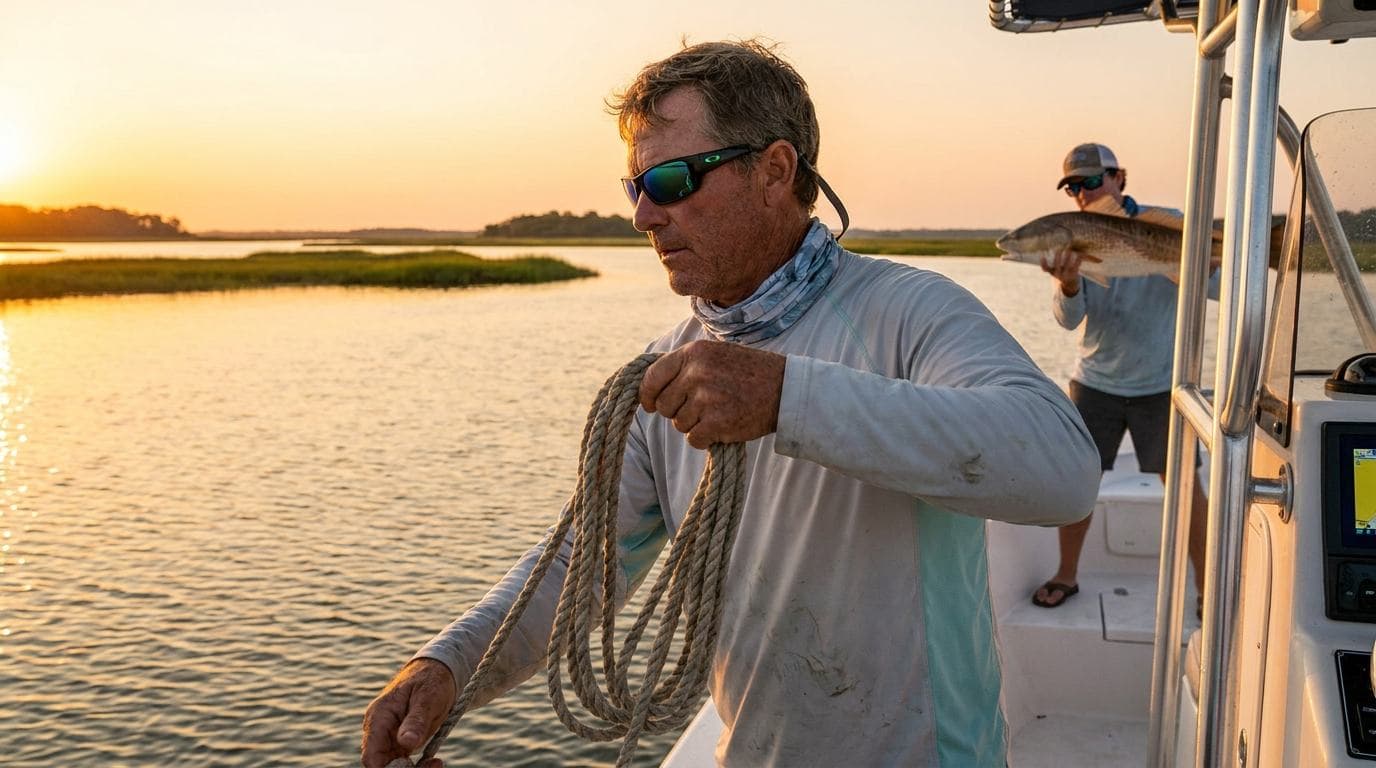
The best time to plant the seed for next year is not in an email three months from now. It is the last 30 minutes of the trip — when the fish are on ice, the rods are down, and the client is relaxed and satisfied.
Ask a few specific questions while the experience is still fresh:
- What time of year tends to work for your schedule for something like this?
- Did you want to bring anyone else next time? Your son mentioned he'd come out.
- That tide window we hit around 7 this morning — I can put you on that fairly reliably in early May.
You're not pitching a rebooking. You're having a natural conversation about what made the trip work. Then say it plainly: "Let me know if you want to hold a date for next spring. April fills fast."
That sentence does two things: it creates mild urgency, and it signals that you'd like to have them back. Most clients won't rebook without some version of that invitation.
The 24-hour follow-up
Within 24 hours of the trip, send a short personal message. Not a survey link. Not a newsletter signup prompt.
"Hey [first name] — great day out there. Those redfish in the back bay were feeding well. If you want to get on the calendar for April or May, I've got slots I can hold. Just reply here."
That's the whole message. Species-specific, date-specific, low-pressure. Compare that to the generic "thanks for booking, please leave a review" email that most platforms auto-send on your behalf. There's no comparison in terms of what a client actually does with it.
A few things to get right:
- Use a first name, not "hi there."
- Reference something specific from the trip — the fish they caught, the flat you worked, the one that got off near the bridge.
- Give them a clear next step without making it feel like a sales call.
If you book through a marketplace like FishingBooker, the guest's contact information often isn't yours to keep freely — or the platform has inserted itself as the communication layer. If you can't send this message because you don't have the client's number, that's a different problem than timing, and it's worth solving before next season.
Why clients don't come back
Before the win-back conversation, it helps to understand what actually causes the drop-off. It's rarely that they had a bad time. The common reasons are more mundane:
- They forgot. Life gets busy. By November, the memory of a June trip has faded enough that booking another one doesn't feel urgent.
- Nobody asked. Most guides send a thank-you and that's the last contact. Clients don't see it as their job to reach out unprompted.
- The platform made rebooking feel transactional. If their experience of booking was logging into FishingBooker and searching, that's the path they'll follow next time — and you're competing in that search again, alongside every other captain in the area.
- They weren't sure they could get the same guide. On platforms showing multiple captains, clients sometimes don't realize they can request a specific person.
Understanding this changes your approach. The problem is usually absence of contact, not dissatisfaction.
The off-season win-back
A client who fished with you a year or two ago but hasn't rebooked is still a good prospect. They know what a trip with you is like. They already trust you. They just haven't been asked recently.
In late January or early February, reach out to every past client who isn't yet on the calendar for spring:
"Hey [first name] — I'm putting together the spring calendar. Last time you were out we hit the trout well around [location]. I've got dates opening in April and May — if you want to get on the list before I post them publicly, just reply and I'll hold one for you."
Notice what this message is not: it's not a bulk newsletter. It's not a discount offer they didn't ask for. It reads like you actually thought about them specifically — because you should have.
The phrase "before I post them publicly" is a real benefit if you actually do hold the dates for 48 hours, which costs you nothing. Make it true. Clients notice when early access is genuine and when it isn't.
Timing matters considerably here. By March or April, most clients have already planned their spring. Reaching out in January or February catches them while the calendar is still open and the idea of being back on the water is just starting to feel appealing again.
Why platform bookings work against repeat clients
When a client books through a marketplace, three things happen that make repeat business harder to maintain:
The platform owns the relationship. The client found you on the platform, and when they think about booking again, they'll navigate back there first. Your competitors appear alongside you in those search results.
Communication flows through the platform's messaging system. You may not get a personal phone number or email address. Some platforms' terms actively prohibit directing clients to book outside the system — a specific clause worth reading if you're listed on one.
The client's memory of the experience associates partly with the platform brand. Next winter, when they're thinking about booking a fishing trip, they may remember "I found a great charter on FishingBooker" rather than your name, your website, or your phone number.
This isn't a moral argument. It's how the incentives are structured. A platform's business depends on being the rebooking channel, so their tools are built to return clients to the platform rather than to you directly. FishingBooker's commission runs 10 to 30% per booking; the slot that client fills on your calendar next year could be yours at zero cost — or it could go through the platform again at 20%.
The list you actually own
The fix isn't complicated: keep a record of every client you take out. Name, contact, what they fished for, when they came. A spreadsheet works fine to start.
What you're building is the ability to send the follow-up above without needing a third party's permission to do it. A client list you own is an asset. A list of bookings inside a platform's system is accessible to you, but it's not yours — and if you ever want to move platforms, or send a message the platform didn't sanction, you'll find that out quickly.
After 50 or 60 trips, managing follow-up manually becomes unreliable. You'll finish a 12-hour day on the water and forget to send the 24-hour text. You'll miss the January win-back window because something else came up. A booking system built for guides handles these sequences automatically so they don't depend on your memory. Timber & Tackle automates the follow-up, stores client history, and lets clients book direct — so you own the relationship from the first trip forward. Take a look at what it costs; it's considerably less than a single commission you'll stop paying.
Running the number
A half-day inshore trip at $450, booked through a platform at 20% commission, nets you $360. The same client rebooking direct the following year nets $450 — same trip, same effort, zero marketing cost.
Over ten trips across five seasons, the difference between a platform-dependent model and one where you convert 40% of first-timers into regulars adds up to substantial recovered margin, plus referrals that compound on top. A repeat client who sends two friends a year generates more value than five one-and-done platform bookings, at zero acquisition cost for any of them.
The strategy isn't complicated. The execution is where most guides leave money on the table.