Nobody Leaves a Review While They're Still Loading the Truck
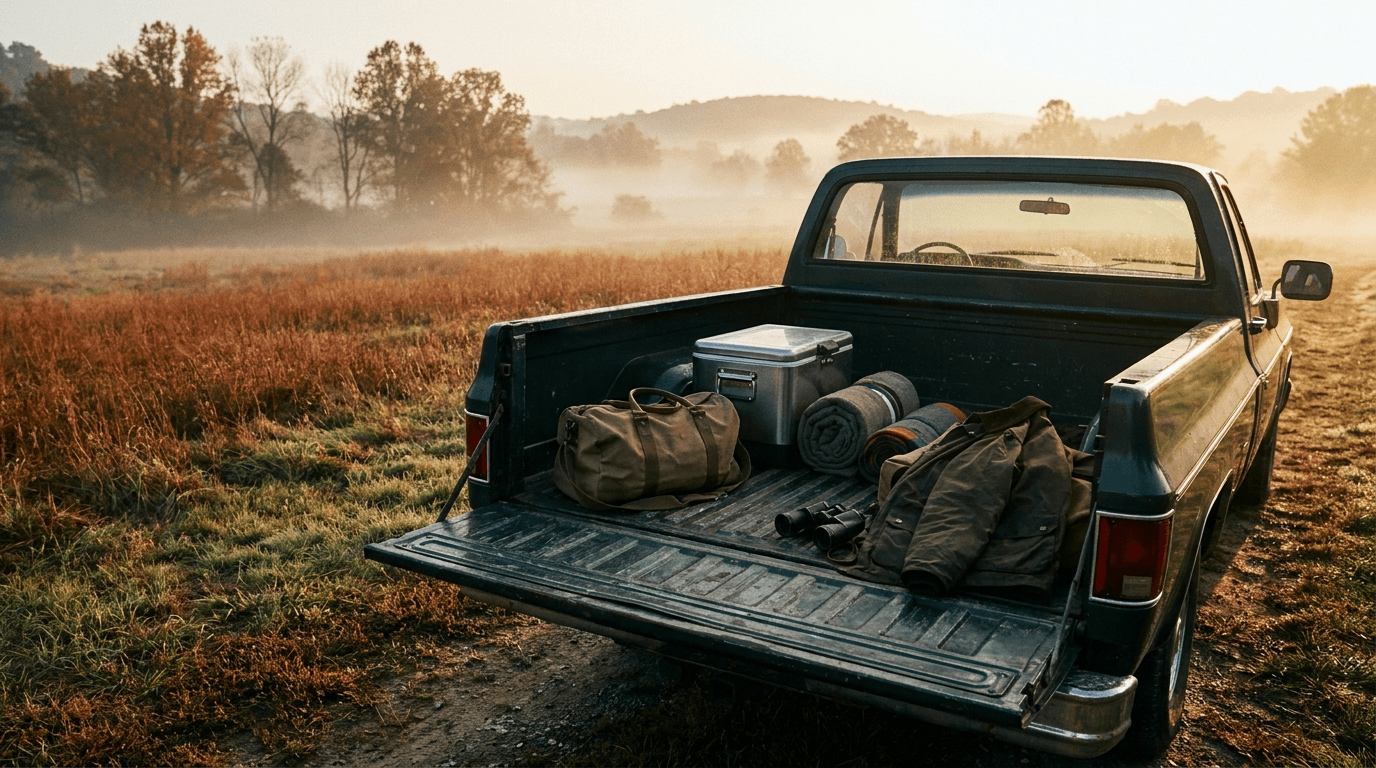
Picture the end of a good hunt. Clients are stiff, cold, hauling gear across a muddy lot, half-listening while you talk about next season. That's the moment a lot of outfitters pick to say "hey, mind leaving us a review?" It's a bad moment. Not because the trip wasn't good — because nobody writes a thoughtful review standing in a parking lot with numb hands and a truck to load.
Most review advice for small businesses is written for a restaurant or a car wash: ask while the customer's still at the counter, catch them before they walk out the door. A guided hunt doesn't work that way. Your client still has a four-hour drive home, a cooler to deal with, a wife or a work Monday waiting on the other side of it. The review isn't going to happen in your parking lot. It happens later, if it happens at all — and where it happens depends entirely on whether you asked in a way that survives the drive home.
Why "Ask Right Away" Is the Wrong Instinct for a Hunt
The logic behind "ask right away" is sound as far as it goes: ask while the trip is still the best thing that happened to the client that week, and don't wait so long that it's buried under everything else. For a sit-down meal, that window closes in hours. For a three-day hunt, it doesn't open that fast — your client needs to get home, unpack, deal with the meat, look at the photos, and actually have the mental space to write four sentences about your outfit. Nobody's published a controlled study on review timing for guided hunts, so be suspicious of anyone quoting an exact ideal hour. But you don't need a study to see the shape of it from the client's side of the windshield.
Ask on the tailgate and you get a distracted "yeah, sure" that never turns into an actual review. Wait three weeks and the hunt has already blurred into the last three hunts he's been on. There's a window in between, and it's wider than a restaurant's but narrower than most guides assume.
The mistake isn't asking too early or too late. It's asking once, at a moment you don't control, and then never following up.
The Two-Touch System That Actually Works
The fix isn't a better script. It's timing the ask so it happens automatically, at the right point, without you having to remember to do it in the middle of gutting a season's worth of bookings.
- First touch, once the client's actually home. Not at the truck. A day or two after the hunt — enough time to unpack and see the photos, not so long that the details have gone soft.
- Second touch, five days later, only if they haven't responded. By day five, the client who was going to write one unprompted has almost certainly done it. The one who meant to and forgot needs exactly one nudge — not three, not a guilt trip, just a reminder that the link's still there.
That's the whole system. It's not complicated. It's just something almost no small outfit actually runs, because it takes a calendar reminder you'll forget by mid-October and a follow-up you won't send because you're already three states into elk season.
| Approach | When it happens | What the client's dealing with |
|---|---|---|
| Asked at the truck | Minutes after the hunt ends | Cold, tired, loading gear, half-listening |
| Asked by text a week later | Whenever you remember | Already booked another trip, hunt's fading from memory |
| Automatic request, day 1–2 | Right after they'd realistically unpack | Home, rested, looking at the photos |
| Automatic reminder, day 5 | Only if they haven't replied | One nudge, not a chase |
This is the piece of the review system that's easiest to build once and never think about again — the guide dashboard walks through exactly how the timed request and reminder fire without you touching a keyboard after the season starts.
What One Review Is Plausibly Worth
Nobody can hand you a conversion rate for outfitter reviews — anyone who does is making it up. But you can reason it through with your own numbers, and the reasoning is what makes the ten minutes of setup worth it. Say your average booking is a five-day hunt at $6,000. A hunter comparing two outfits at similar prices — one with a page of recent, specific reviews that mention the guide by name, one with four reviews from 2023 — is not flipping a coin. If a full season of consistent, well-timed review requests tips even one of those comparisons your way over the next year, that's $6,000 in revenue against a two-line email and an automated reminder. If it tips two, the math embarrasses everything else on your marketing list. Run it with your own hunt price and your own booking volume; the conclusion survives almost any honest input, because the cost side of the ledger is nearly zero.
What to Actually Say (and What Not To)
Keep the ask short. Nobody wants to read three paragraphs about your gratitude before they get to the link.
"Thanks for hunting with us this week — we'd genuinely appreciate a quick Google review if you have two minutes. Here's the link: [link]"
That's it. No essay, no "your feedback means the world to us." One line of thanks, one link, done. If the hunt had a rough moment — bad weather, a missed shot, a dog that didn't want to work — say so before you ask, not after. "Sorry the wind killed the morning hunt, hope the evening sit made up for it" reads as honest. Pretending the trip was flawless when the client knows better reads as fishing for a review, and it costs you the one you'd have gotten anyway.
One thing worth knowing: Google's review policies prohibit "review gating" — sending the review link only to clients you think were happy and quietly skipping the ones you're not sure about. Send the same request to everyone. A guide who only asks his best days for feedback ends up with a profile that looks manufactured, and Google has gotten better at noticing.
When a Review Comes Back Rough
Every outfit gets one eventually. A hunt with weather that didn't cooperate, a client who wanted a bigger buck than the property had, a miscommunication about what "guided" meant. Respond to it — publicly, briefly, without getting defensive. State what happened, state what you'd do differently if anything, and move on. A calm, specific response to a three-star review does more for a prospective client reading your page than ten five-stars with no replies at all. It shows someone's actually running the business.
Don't argue in the reply. Don't relitigate the hunt in public. If there's a real fix — a refund, a make-good hunt, an apology that's owed — handle it by phone or email first, then let the public response be short and professional.
Where the Reviews End Up Mattering Most
A review on a marketplace listing helps that listing. It's real, and it's worth having if you keep a listing for the strangers it brings you. But the review that shows up when someone searches your name directly — on your own Google Business Profile, tied to your own site — is the one a repeat client checks before recommending you to a hunting buddy. That's the one a new client reads right before deciding whether to call.
Building that habit doesn't require new software you have to learn mid-season. Timber & Tackle runs the two-touch request in the background of every booking — the day-later ask, the day-five reminder — so the only thing left for you to do is guide the hunt and answer the phone when it rings.
If you want the fuller playbook on turning a handful of five-stars into an actual review system — responding, reporting fakes, using reviews on your own site — this walks through the rest of it. The timing is the part guides skip. Get that right first.