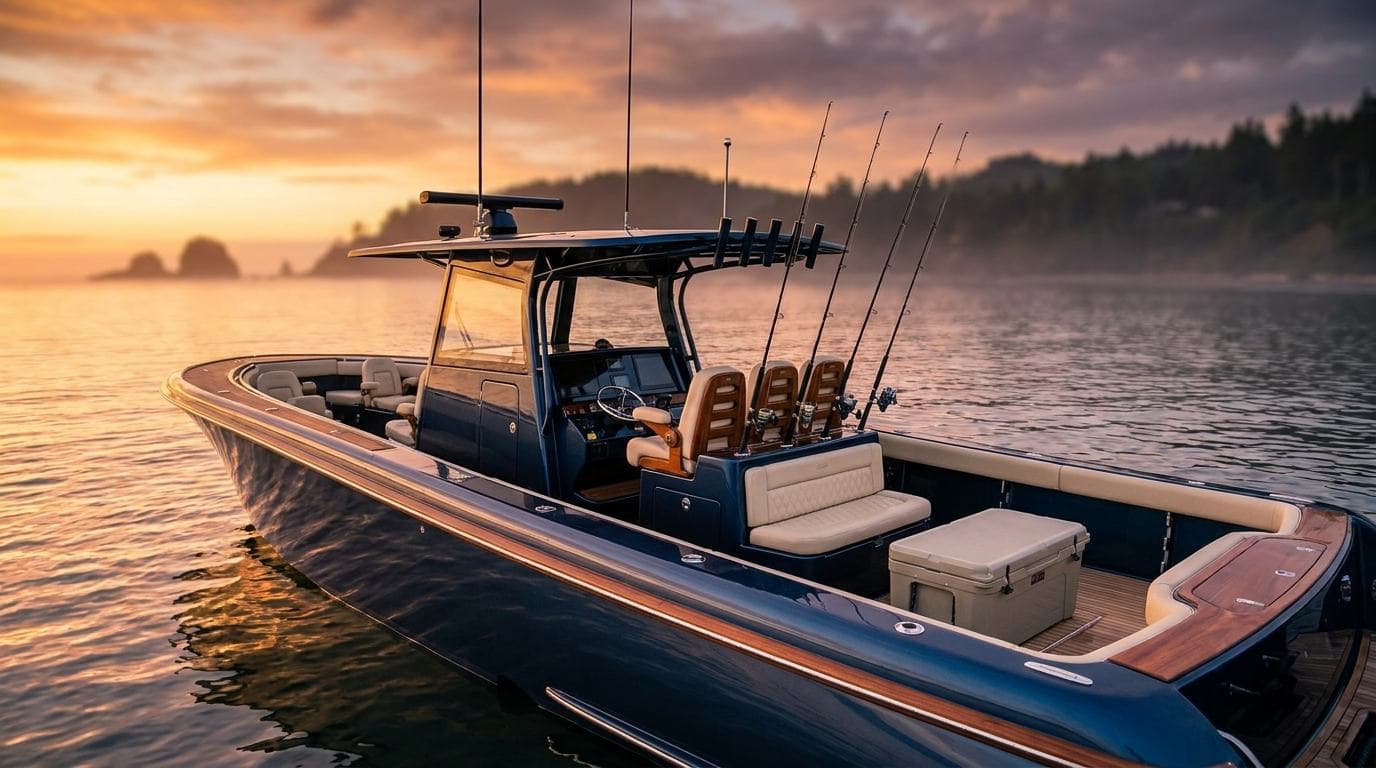
The Grid Doesn't Know What Your Trip Is Worth
Open a booking marketplace and search "redfish charter" or "guided elk hunt." You get a grid. Every listing has the same thumbnail size, the same star rating, the same "Book Now" button. A $1,200 all-day charter run by someone with twenty years on the water sits next to a $400 half-day trip out of a jon boat. The grid can't tell the difference. It isn't built to.
That's the real cost of listing on a marketplace. Not just the commission — the compression.
Commoditization Is the Bigger Threat, Not the Fee
There's a name for what happens when buyers stop seeing a difference between sellers: commoditization. Once a category commoditizes, price becomes the only lever left standing. Buyers stop asking "who's the right guide for this trip" and start asking "who's cheapest." The commission math already covers what a platform takes off the top of your rate. This is about what the format does to you before a client even opens your listing.
A marketplace grid exists to let someone compare a dozen similar-looking options in thirty seconds. That's the opposite of what a premium guide needs a prospective client to do.
What the Platforms Are Actually Optimized For
Look at the published terms, and it stops sounding like paranoia:
- FishingBooker's commission is captain-set at 10–30% of every trip — the deposit you set is the commission.
- FareHarbor is free to the operator and monetized through a booking fee added at your customer's checkout — commonly reported around 6% in the US; FareHarbor doesn't publish the rate.
- Guidesly publishes three tiers by where the booking started: a 3% card-processing fee on trips you book yourself, 10% per booking through the site they build you, 15% per booking through their marketplace.
- On the hunting side, BookYourHunt's price-parity rule won't even let you offer a repeat client a better rate direct. Captain Experiences' terms (Section 5.9) have guides agree "not to solicit or encourage Adventurers to book trips outside of the CE system." Outdoors International positions itself, in its own pitch to hunters, as the client's point of contact for every future trip — not you.
Each of those is a fee or a clause. Stacked together, they add up to something bigger: the relationship lives on the platform's rails, not yours. Even where a platform lets you re-book a past customer commission-free — FishingBooker's Direct tool genuinely does — that tool runs on their platform, on their domain, under their account. The client still isn't on a list you own, and next season he searches the platform's name, not yours.
What a Premium Direct Brand Keeps
A guide with their own site keeps three things a listing never gives back: the full trip price, the client's contact information, and control over how the trip gets told. None of that shows up on a commission calculator. All of it compounds over a decade of seasons.
| What's being compared | Marketplace listing | Owned premium brand |
|---|---|---|
| Who sets the price | Platform pressure toward the median | You, based on what the trip is actually worth |
| Who owns the client record | The platform | You |
| Repeat booking | Client re-enters the grid and re-shops | Client books you directly, no search required |
| Referral capture | Referral often lands back on the platform | Referral lands on your site |
| How the trip is presented | A thumbnail next to competitors | Your story, your photos, your terms |
Think about what that table actually predicts. Referrals are the clearest case: a happy client tells a coworker about their trip, the coworker searches your name, and if you only exist as a listing, that search often lands back on the platform's own results — next to three competitors you never asked to be compared with. A guide with a real site captures that referral cleanly, on ground you control.
Pricing Confidence Is a Positioning Problem, Not a Math Problem
Plenty of guides already know they're underpriced. Most still don't raise rates. It's rarely the math that stops them — it's the position. Hard to charge what a trip is worth when your listing sits two rows below a stripped-down competitor charging half as much, in the same layout, behind the same button.
Take the grid away and the comparison changes shape entirely. A client who lands on your own site isn't measuring you against the cheapest option on the page. There is no page of options. They're deciding whether they want to book a trip with you. That's a different sale — and it's one you can actually win on craft instead of price.
A $1,200 charter listed next to a $400 charter competes on price. A $1,200 charter on its own premium site competes on being worth $1,200.
"But the Marketplace Brings Me Leads"
Fair objection. Marketplaces do bring volume — finding you strangers is real work, and a commission on a genuine stranger is honest pricing for it. But volume and margin aren't the same thing, and a lead that costs you 20% of the trip plus your client's contact record isn't free reach. It's rented reach, and the rent is due on every booking that routes through the platform.
Run the season in dollars. Picture two captains with the same boat, the same skill, the same $1,200 all-day trip, 50 trips a season — $60,000 gross either way. The first lists exclusively on a marketplace with his commission set at 20% (FishingBooker's is captain-set, 10–30%): $12,000 of his season goes out as commission, and every client record lives in the platform's database. The second runs a premium site alongside the same listing. Fifteen of his trips are genuine strangers the marketplace found — he pays the same 20% on those, $3,600, and that's fair money for real work. The other 35 are repeats, referrals, and people who searched his name: booked direct, $42,000 kept whole, at a software cost of $19 a month — $228 for the year. Same boat, same water: $12,000 out versus $3,828. The roughly $8,200 gap isn't a discount he hunted down. It's the difference between renting all of his demand and renting only the part he genuinely couldn't reach himself.
None of that requires abandoning any channel. It requires owning the version of your business that compounds — the site, the list, the direct relationship — instead of renting all of it from someone else's grid.
What This Looks Like in Practice
This is the whole idea behind Timber & Tackle: a guide website that's actually yours — your domain, direct Stripe payments, a client list that stays yours regardless of which platform your next customer happened to find you through. Flat $19 a month, zero commission, no lock-in clause buried in the terms.
Walk through a working fishing guide's site built on it or an outfitter's version built for hunting to see what a brand looks like next to a listing. Or click through the booking demo and watch what a client experiences when they book you directly instead of scrolling past you in a grid.
Your trip was never the problem. The grid was.