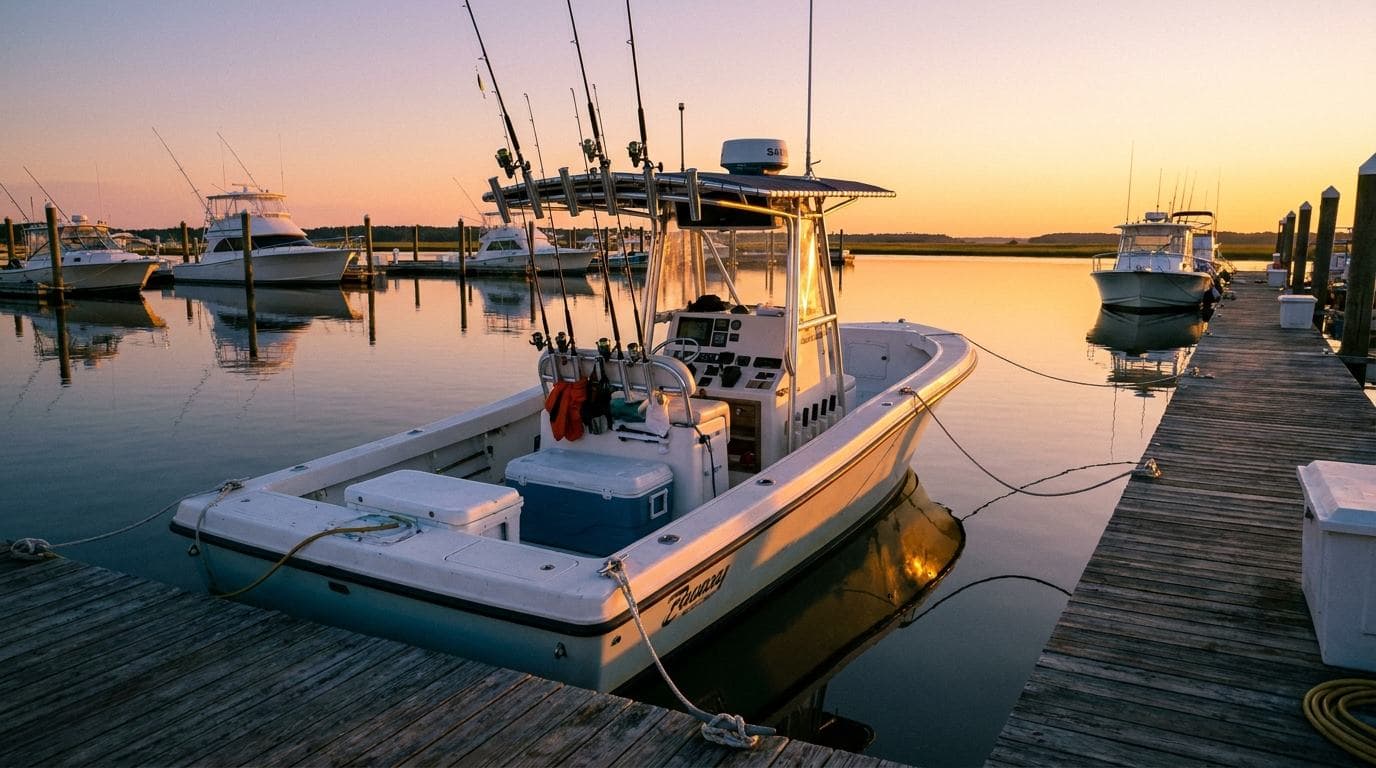
The question every trip ends with
"Can you send me that picture?" It happens on the dock, at the truck, on the walk back to the lodge — someone wants the shot of the fish over the rail or the buck loaded in the bed. Most guides say sure, snap a screenshot weeks later when they remember, and text a single blurry photo with no name, no logo, no way back to the business that made the day happen.
That's a missed rebooking. Not a small one, either.
Why the text-message photo dies fast
A photo dropped into iMessage or a group text competes with everything else on that phone. It scrolls off in a day. There's no name attached to the business, nothing to click, nothing to forward except a screenshot that's already lost a generation of resolution. The guide who sends it feels like they did the client a favor. The client forgets who sent it by the following weekend.
Compare that to what actually sticks: a client who gets every photo from the trip — not just the one someone happened to snap on their own phone, but the guide's shots too — sitting on one clean page with the business's name and colors on it. That page gets forwarded to a hunting buddy or a group chat. The text photo doesn't. And the cheapest booking a guide will ever get is the buddy of a client he just put on fish — a buddy who can't find him off a grainy screenshot.
| Texting photos one at a time | Branded trip recap | |
|---|---|---|
| What the client gets | 1–2 photos, whatever's on someone's phone | Every shot from the trip, in one place |
| Brand attached | None | Your logo, colors, business name |
| Shareable | Screenshot quality, no context | A real page they can forward or post |
| Rebooking prompt | None | A "book again" link right on the page |
| Time cost to you | Digging through your camera roll later | Upload once, send |
What's actually worth shooting
Most guides only grab the grip-and-grin at the end — fish over the rail, buck behind the tailgate, one shot, done. Here's the uncomfortable truth about that shot: it's the one the client wants and the least shareable one you'll take all day, because everyone in his feed has seen a thousand of them. A recap page that's actually worth passing along needs more than the trophy frame:
- The build-up: gear loaded at first light, the blind or the boat before anyone's caught anything yet.
- The process: a hookset, a stalk, the dog working a field — action beats posed shots for anyone who wasn't there.
- The reaction: the client's actual face in the moment, not the stiff pose they hold for the camera three seconds later.
- Wide shots of where they were — the marsh, the ridge, the timber. It's the setting people romanticize as much as the harvest itself.
None of that requires new gear. A guide's phone camera, used through the whole trip instead of just at the end, is enough. The recap tool takes video too, so a ten-second clip of a hookset works exactly the same way a photo does.
Send it within 48 hours
The trip is still the thing they're telling people about. Wait two weeks and you're competing with whatever happened since — a different trip, a work deadline, the memory already fading into "yeah it was good." Send the recap while they're still riding the high of the day, and you're the one who made that feeling last.
This isn't complicated. It doesn't need to be clever copy or a long email. "Here's every shot from your trip — show it off, and come do it again" does the entire job.
Why this beats posting to your own feed instead
Plenty of guides already post trip photos to their own Instagram, and that's worth keeping up — but it's not the same job. A public post is about your audience seeing your work. A recap page is about the client's audience seeing their trip. Different reach, different trust: a photo a stranger posts about a guide reads as an ad. The same photo, shared by the client who lived it, reads as a recommendation from someone their friends actually know. Both matter. Only one of them is automatic once you've built the habit of sending recaps.
The part that compounds
A recap someone actually shares is marketing you didn't have to write. Their friends see it. Their spouse sees it. Somebody who's been meaning to book a trip for two years finally does, because a buddy posted a clean, branded page of his redfish instead of one grainy screenshot. You can't buy that kind of referral — you can only make it easy to happen.
Put conservative numbers on it. Take a captain running $650 half-day redfish trips who sends a recap after every one of 40 trips in a season. Most get looked at, saved, and that's all — fine. Say one gets forwarded to a brother-in-law who's been meaning to book for two years, and he finally does: $650. Say the client who shared it rebooks in the fall because the "book again" link was sitting right under his best fish: another $650. That's $1,300 traced back to one recap page, at a marketing cost of five minutes and zero dollars. It only takes one or two of the forty landing that way for the habit to outearn most things a guide could actually buy with an ad budget — and unlike an ad, every recap also leaves a happy client holding proof of the day with your name on it.
It also sets up the next ask cleanly. Once someone's had a good experience wrapped in a good recap, a review request lands differently than a cold "please review us" text. Timber & Tackle sends that review request automatically after a trip's marked complete, with one gentle reminder five days later if it hasn't landed yet — separate from the recap, but part of the same after-the-trip sequence that turns a single booking into three more things: a shared photo, a five-star review, and a repeat client.
How this actually works, without extra software
In practice: you upload the trip's photos — and video, if you shot any — straight onto that client's booking. The system builds a private, branded recap page automatically and mints the link the first time you add a photo. One click sends it. No separate app, no client login, no size limit on how many shots you dump in. If a client booked off-platform entirely, the recap tool still works — it's tied to the booking, not to how the client found you.
You can see the whole flow live rather than take our word for it: the Cypress Bayou Guides demo site shows what a client-facing recap page actually looks like, and the explorable fishing dashboard lets you click through the upload-and-send flow yourself.
Start with your next trip
You don't need to build a backlog of old photos to make this work — just start sending recaps on trips going forward. The habit pays off faster than most marketing spend a guide makes: no ad budget, no waiting on SEO, just the photos you were already taking, delivered in a way that gets looked at and passed along.
If you're running your book through spreadsheets and text messages right now, setting up a Timber & Tackle site gets you this — and the automated review and win-back emails that follow it — without hiring anyone or learning new software.