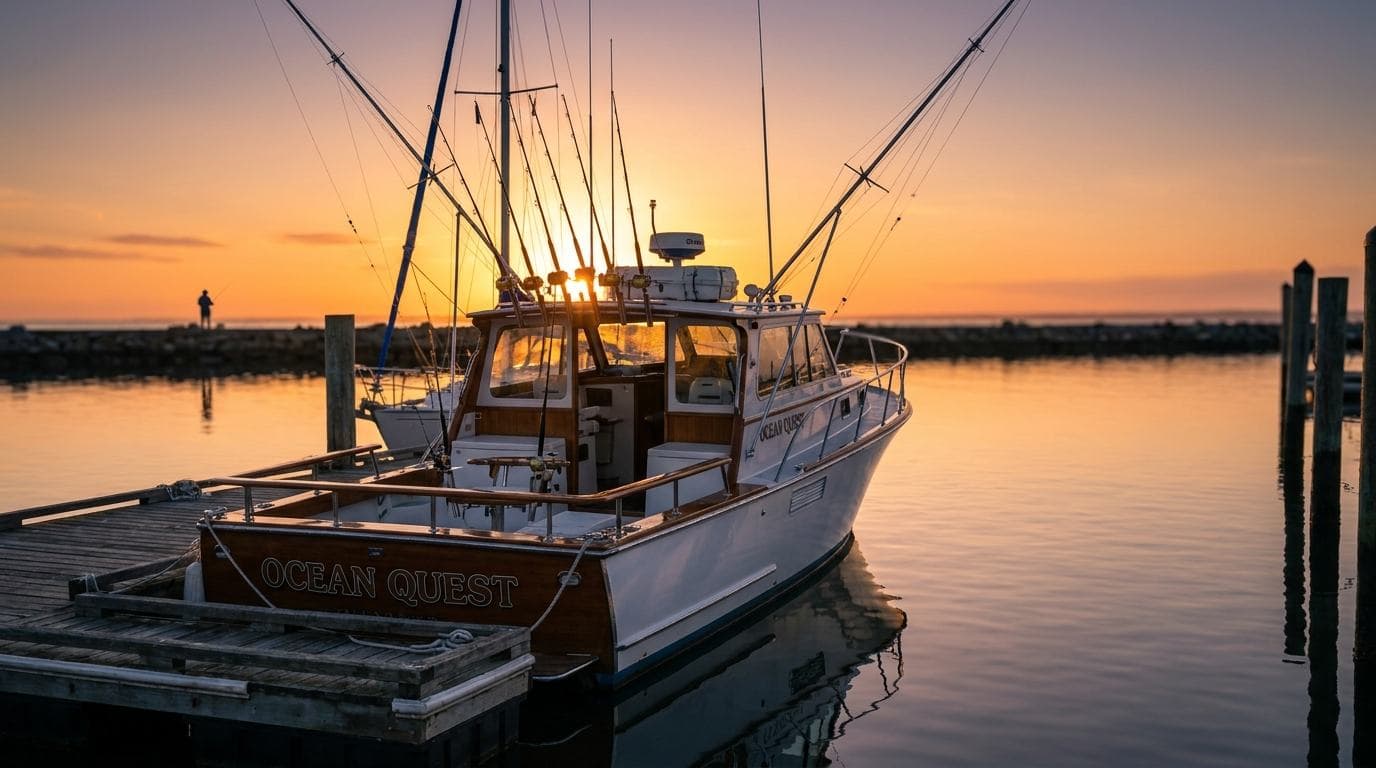
A guide we'll call Mike — not a real captain, just a composite stand-in for a spot plenty of working guides have been in — just wrapped a redfish trip booked through a marketplace app. His client landed the biggest fish of his life, tipped well, and said the thing every guide wants to hear: "I want to book you again next spring, just you and me, no app." Mike can't say yes to that the way you'd think.
Not because he doesn't want the rebooking. Because his platform agreement says he isn't allowed to ask for it.
The clause guides don't read until it matters
Captain Experiences, one of the larger fishing-and-hunting booking marketplaces, spells this out in Section 5.9 of its terms and conditions (last updated November 2024): guides agree not to solicit or encourage a client booked through the platform to book future trips outside of it. Not "can't undercut our price." Not "can't poach our marketing." Can't ask.
Read that again. The guide did the work — ran the boat, found the fish, earned the trust — and the terms he signed say the resulting relationship belongs to the app, not to him. Handing a business card on the dock and saying "email me next time" is exactly the behavior the clause exists to prevent.
Why the clause is there at all
This is just the business model working as designed. A booking marketplace's entire value is repeat traffic through its own funnel — every guide who quietly moves clients off-platform is revenue the marketplace paid to acquire and then lost. So the terms close the door before it opens. You get the booking. They keep the relationship.
That's the trade every commission platform makes, in one form or another — just written differently depending on which one you're reading.
The platform doesn't just take a percentage of the trip. It takes the part of the business that was going to make the next ten trips free to acquire.
What "owning the client" is actually worth
Commission math gets talked about a lot — the captain-set 10 to 30 percent that is the deposit on FishingBooker, the booking fee FareHarbor adds to the customer's bill at checkout (commonly reported around 6 percent in the US, though FareHarbor doesn't publish the rate). Real numbers, worth knowing. But they undercount the actual cost, because they only measure the first trip.
Referral-marketing research (Wharton's Schmitt, Skiera & Van den Bulte study on customer value, among others) puts a referred customer's average value at roughly 16 percent higher than a similar non-referred one, largely because they arrive with less convincing needed and stick around longer. That number isn't fishing-specific — nobody's run that exact study on charter clients — but the mechanism is the one every captain already knows from experience: the second trip is easier to sell than the first, and the client who refers a buddy is worth more than either trip alone.
A clause that blocks you from even asking for that second trip isn't costing you a percentage. It's costing you the compounding part of the business — the part where year three is more profitable than year one because you're not paying to find every client from scratch.
Mike's next spring, in dollars
Put the rebooking itself on paper. Say the trip Mike's client wants next spring is a $1,200 redfish charter. Here's the first thing worth noticing: you can't actually run this math for Captain Experiences, the platform Mike is on — their terms confirm a commission is retained on completed bookings, but the percentage isn't published anywhere. A cost you can't price is its own kind of answer.
So run it on FishingBooker's published model instead, where the numbers exist. A fresh platform booking with the commission set at 20 percent — mid-range of the captain-set 10 to 30 — means a $240 deposit, and on their model the deposit is the commission. Rebooked through FishingBooker Direct, which genuinely does let a captain send a past customer a commission-free link, the cost drops to processing at 2.65 percent plus three cents: about $32 — a fair deal on its face, with the catch that the booking still lives on their platform, under their account, and the client still isn't on a list Mike owns. Booked on his own page, it's card processing plus a flat $29 for the month — covering that trip and every other booking the same month, with the client's name, number, and history in Mike's own records. $240, $32, or a flat $29 that doesn't scale with the trip. The gap between those numbers is the price of the relationship.
How the major platforms handle it
The specifics vary. None of them are shy about it once you go looking.
| Platform | What it actually restricts |
|---|---|
| Captain Experiences | Terms bar soliciting or encouraging a platform client to book outside the platform (Sec. 5.9) |
| FishingBooker | 10–30% deposit commission on every platform booking; Direct re-books of past customers trade the commission for a processing fee, inside their system |
| FareHarbor | Booking fee added to the customer's bill at checkout — commonly reported ~6% in the US; FareHarbor doesn't publish the rate |
| Guidesly | Per-booking fees of 3%, 10%, or 15% depending on where the booking originated (the 3% is card processing on bookings you take yourself) |
| BookYourHunt | Price-parity rule — you can't offer your own clients a better price direct |
| Outdoors International | Positions itself as the client's point of contact for every future trip, not just the current one |
Six platforms, six different mechanisms, one shared outcome: the client relationship stays with the marketplace, not the person who actually ran the trip.
What "solicitation" covers in practice
This is where it gets uncomfortable for a working guide. A strict reading of a no-solicitation clause covers more than you'd assume:
- Handing over a personal business card with your direct email or phone number
- Saying "next time, just text me" as the client's walking off the boat
- Sending a post-trip thank-you from a personal account that mentions booking direct
- Posting a client's catch photo on your own page and tagging them with a rebooking nudge
Most guides do at least one of these without a second thought. Most platform agreements, read literally, don't allow it. Whether that gets enforced against any individual captain is a separate question — but the power to enforce it is written into the contract either way, and that's the part worth sitting with.
What owning the relationship actually looks like
None of this means marketplaces are worthless — they put a first-time client in your boat you might never have found otherwise, and that's real. The fix isn't quitting them. It's making sure they're not the only place a client can find you again.
That means a booking page that's yours — one you can point a client to without violating anyone's terms, because it isn't theirs to restrict. It means the client's name, email, and trip history live in a system you control, not one you're renting access to. It means the review request, the season-opener email, and the photo recap after the trip all come from you, not from a platform whose incentive is to keep that client shopping among captains instead of coming straight back to one.
That's the whole model behind Timber & Tackle: a flat $29 a month, zero commission, free until you accept your first booking, and every client record stays yours from the first trip on — no clause to read twice before you ask someone back. You can see what that booking flow feels like from the client's side in the live booking walkthrough, or look at a working fishing guide's site built on it to see what "yours" actually looks like next to a marketplace listing.
The trip Mike ran was worth a tip and a five-star review either way. What he lost was the ability to say yes to the easiest sale he'll get all year — the client already sitting in his boat, already sold, already asking. Read your terms before your next great trip ends the same way.